What are the antioxidants in green tea?
Written by Dian VAULTIER·
In Brief
- Green tea is among the most extensively documented plant sources of antioxidant compounds, owing to its limited processing, which preserves most of the native polyphenols…
- Catechins belong to the flavan-3-ol family and account for up to 30% of the dry weight of a green tea leaf.
- HOLLIN sommelier expertise: the antioxidants in green tea explained by a purist Tea House, with no added flavourings, based in Sartrouville (Île-de-France) and shipping its grand crus worldwide.
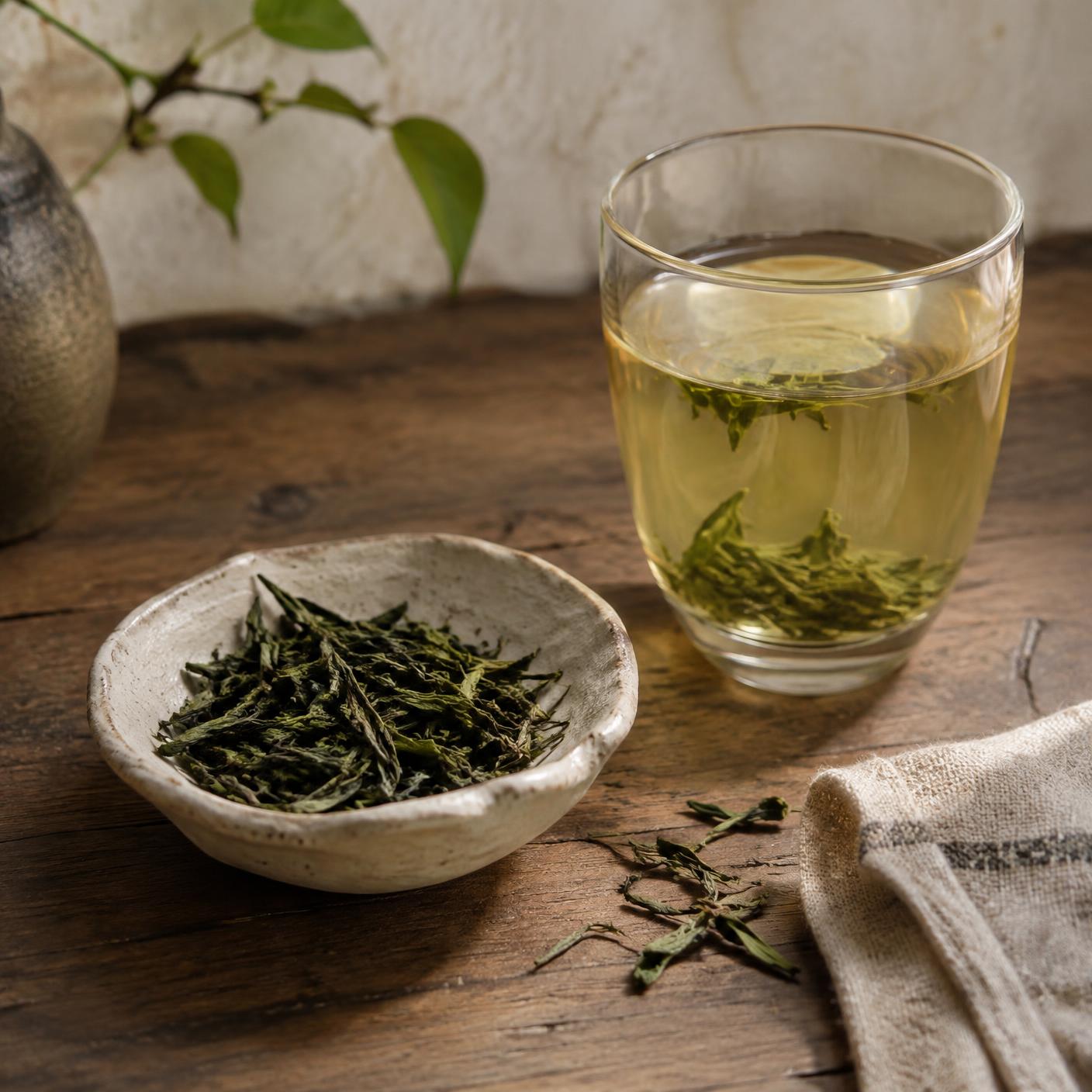
The green tea is one of the most extensively documented plant sources of antioxidant compounds, due to its limited processing, which preserves most of the polyphenols native to the fresh leaf. Catechins, and among them epigallocatechin gallate, or EGCG, are the cornerstone of this biochemical richness. A rigorous overview of these molecules helps explain why green tea holds a special place in the study of dietary antioxidants.
Catechins, major families of polyphenols
Catechins belong to the flavan-3-ol family and account for up to 30% of the dry weight of a leaf of green tea. Unlike black tea, where enzymatic oxidation transforms these catechins into theaflavins and thearubigins, the absence of oxidation in green tea preserves their original molecular structure.
The main catechins identified include epicatechin, epigallocatechin, epicatechin gallate and, above all, epigallocatechin gallate, or EGCG, the most abundant and most extensively studied for its antioxidant capacity.
EGCG, a molecule at the heart of research
EGCG is distinguished by its structure, which contains multiple hydroxyl groups capable of neutralising free radicals by donating hydrogen atoms. This intrinsic antioxidant capacity has made this molecule the subject of extensive research in nutritional biochemistry for several decades.
EGCG concentration varies significantly depending on the cultivar, harvest season and processing method. Young leaves harvested in spring, before lignification progresses, generally have the highest levels.
Optimizing polyphenol intake through appropriate steeping
Catechin extraction depends heavily on steeping temperature and timetime. Water that is too cold limits their dissolution, while water that is too hot or steeping for too long intensifies their release to the point of generating excessive astringency, without a proportionate additional benefit.
A time between 70 and 80 degrees Celsius, for two to three minutes, generally offers an effective balance between satisfactory catechin extraction and preserved flavour, for the majority of green teas Japanese and Chinese teas.
The purist selection of HOLLIN
At the HOLLIN du Goût counter, 22 avenue de la République, 78500 Sartrouville, open Monday to Saturday from 10h to 20h, we favour spring harvests, renowned for their richness in catechins, and guide you towards the teas best preserved through rigorous storage away from light and moisture.
Our tea masters also advise you on thetime best suited to combining tasting pleasure with the optimal preservation of the antioxidant compounds naturally present in the leaf.
Frequently Asked Questions (FAQ)
- Which green tea contains the most EGCG?
- The green teas unshaded Japanese teas, such as Sencha, are among the richest in EGCG, as exposure to sunlight promotes catechin synthesis. Spring harvests, gathered from young buds, generally have the highest concentrations.
- Does brewing green tea for too long destroy its antioxidants?
- A time Steeping for too long does not destroy catechins, but releases an excessive amount, resulting in unpleasant astringency without a proportionate additional antioxidant benefit. A steeping time of two to three minutes at a moderate temperature remains the most balanced approach.
- Does powdered green tea such as matcha contain more antioxidants than brewed tea?
- Yes, the Matcha, consumed as a whole leaf dissolved in water rather than brewed and then removed, provides all the compounds in the leaf, including the catechins that would normally remain trapped in the leaves discarded after a time classic brew.