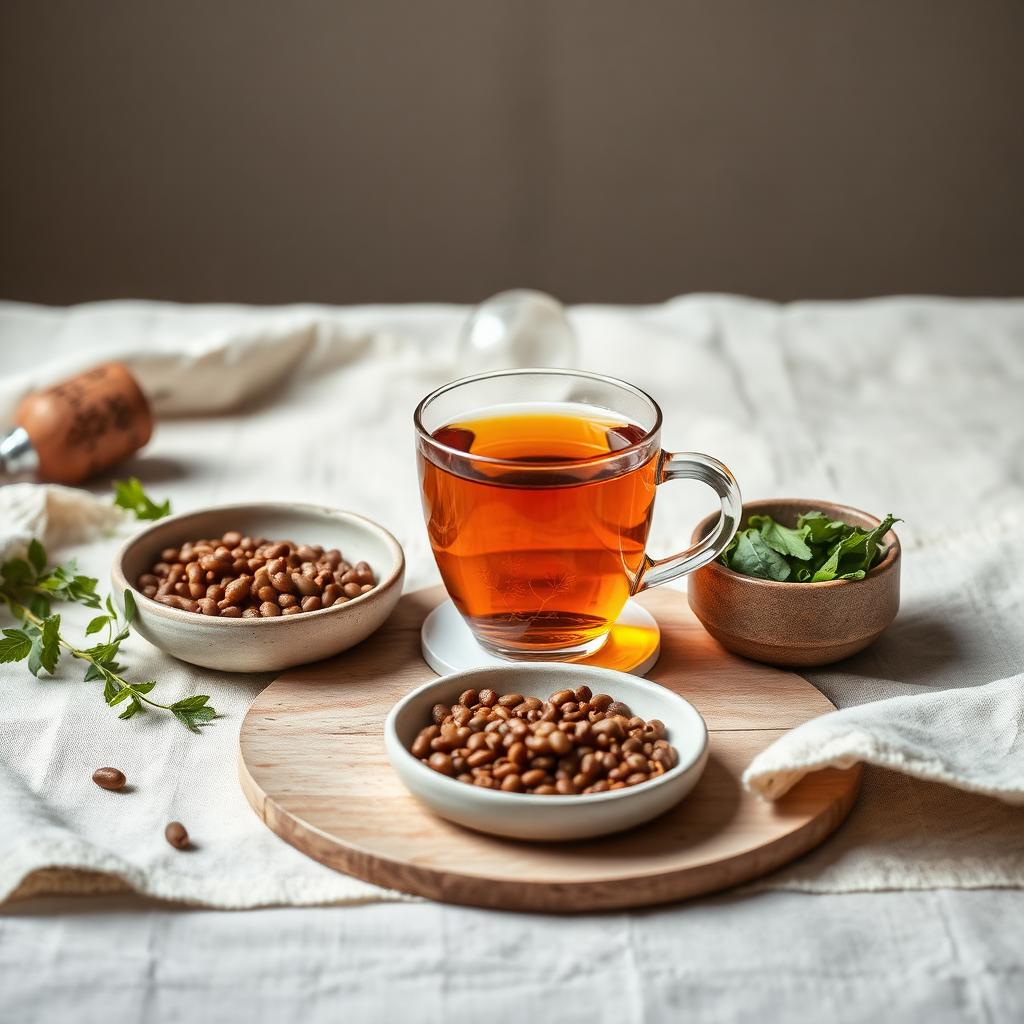
Does tea prevent iron absorption? (Biochemical analysis)
Written by Dian VAULTIER·
In Brief
- Tea reduces the absorption of non-heme iron, the form of plant origin, through chelation: the polyphenols in the leaf bind to ferrous iron in the intestine and form complexes that…
- Dietary iron exists in two forms.
- HOLLIN sommelier expertise: whether tea prevents iron absorption, explained by a purist Tea House based in Sartrouville (Île-de-France), offering teas without added flavorings and shipping its grand crus worldwide.
The tea reduces the absorption of non-heme iron, the form of plant origin, through chelation: the polyphenols in the leaf bind to ferrous iron in the intestine and form complexes that the body cannot absorb. It has virtually no effect, however, on the heme iron found in meat and fish. The extent of the phenomenon depends on when the tea is consumed, the concentration of the liquor and the presence of vitamin C in the same meal.
The mechanism: polyphenol chelation and non-haem iron
Dietary iron exists in two forms. Heme iron, found in the hemoglobin and myoglobin of animal products, is absorbed by a dedicated transporter with a high absorption rate, around 15 to 35 percent. Non-heme iron, derived from legumes, whole grains and green vegetables, is absorbed far less easily, between 2 and 20 percent, and is highly sensitive to its chemical environment.
Tea polyphenols, primarily catechins and, in oxidized teas, theaflavins and thearubigins, contain hydroxyl groups capable of binding to metal ions. This chelation transforms non-heme iron into a stable, insoluble complex that the intestinal mucosa can no longer absorb. Tannic acid is the leaf's most effective chelating agent, which explains why a black tea strongly steeped has a more pronounced effect than a white tea light one.
This is therefore a local and temporary interaction, limited to the food bolus present at the time of consumption. It does not deplete the body's reserves and does not affect iron that has already been absorbed.
What the practice really changes
Three variables determine the intensity of the effect, and all three are under your direct control.
When it is consumed
This is the most decisive factor. When consumed during a meal, tea encounters dietary iron at the precise moment of its absorption. Consumed one hour before or after, the interaction becomes marginal, since the polyphenols have largely been metabolized and the food bolus has left the duodenum, the primary site of iron absorption.
For someone without a deficiency, this simple shift in timing is enough to make the question irrelevant. For someone being treated for iron-deficiency anemia, it is a standard clinical recommendation, as is keeping coffee and dairy products separate from meals.
The concentration of the liquor and the tea family
A time prolonged and overdosed extracts more polyphenols and mechanically increases chelation. A short steeping, in the spirit of gong fu cha, primarily releases amino acids and a limited fraction of catechins. The white teas, lightly oxidized and gently brewed, have the lowest chelating capacity.
Adding a source of vitamin C to the meal partially reverses the equation. Ascorbic acid reduces ferric iron to ferrous iron and forms a soluble complex with it that resists chelation by polyphenols. A squeeze of lemon, a kiwi or a raw bell pepper with the same meal restores a significant proportion of absorption.
Alternatives without caffeine or interfering tannins
The rooibos is not a tea: it comes from Aspalathus linearis, a legume native to South Africa. It contains neither caffeine nor tannic acid in the Camellia sinensis sense, and its impact on iron absorption is considered negligible. It is the simplest option to accompany a meal rich in plant-based iron.
The herbal teas of plants, excluding hibiscus and highly tannic plants, offer the same advantage. They allow you to retain the ritual of a hot cup at mealtimes without interference, while reserving specialty tea for tasting moments away from meals.
The position of Maison HOLLIN
We make no health claims and sell no tea presented as a supplement. Our work focuses on the leaf: pure teas, tasted batch by batch, whose composition is unaltered by any additive. This transparency is precisely what allows readers to make informed decisions about what they drink.
If this is a clinical concern for you, your doctor remains the person to consult. For the tasting aspect, our HOLLIN du Goût counter, 22 avenue de la République, 78500 Sartrouville, is open Monday to Saturday from 10h to 20h, and there we tailor advice on 'time to your daily practice.
Frequently Asked Questions (FAQ)
- How long should you wait between an iron-rich meal and a cup of tea?
- An interval of one hour before or after the meal is the most commonly accepted recommendation. This allows the food bolus time to pass through the duodenum, where most non-heme iron is absorbed, and the tea polyphenols time to be metabolized. For someone with a deficiency, an interval of two hours is sometimes advised by the attending physician.
- Does green tea block more iron than black tea, or vice versa?
- Both have an effect, through different molecules. The green tea is rich in free catechins, particularly EGCG, which are highly chelating. The black tea contains fewer free catechins but more theaflavins and thearubigins, which are also chelating and often extracted in greater quantities owing to 'herbal teas longer. In everyday practice, a strongly steeped black tea has the most pronounced effect.
- Does a vegetarian have to give up specialty tea?
- No. A vegetarian diet relies on non-heme iron, which is therefore more sensitive to polyphenols, but two adjustments are sufficient: consume tea one hour apart from meals, and systematically pair a source of vitamin C with dishes rich in plant-based iron. Tasting grand crus then remains entirely compatible with careful nutritional monitoring.