What is terroir in tea? (Soil, altitude, cultivar)
Written by Dian VAULTIER·
In Brief
- A tea's terroir is the combination of physical and biological factors that alter the chemical composition of the leaf even before it is processed: soil type, altitude, range…
- Camellia sinensis requires acidic soil with a pH between 4,5 and 5,5.
- HOLLIN sommelier expertise: what is terroir in tea, deciphered by a purist Tea Maison, with no added flavourings, based in Sartrouville (Île-de-France) and shipping its grand crus worldwide.
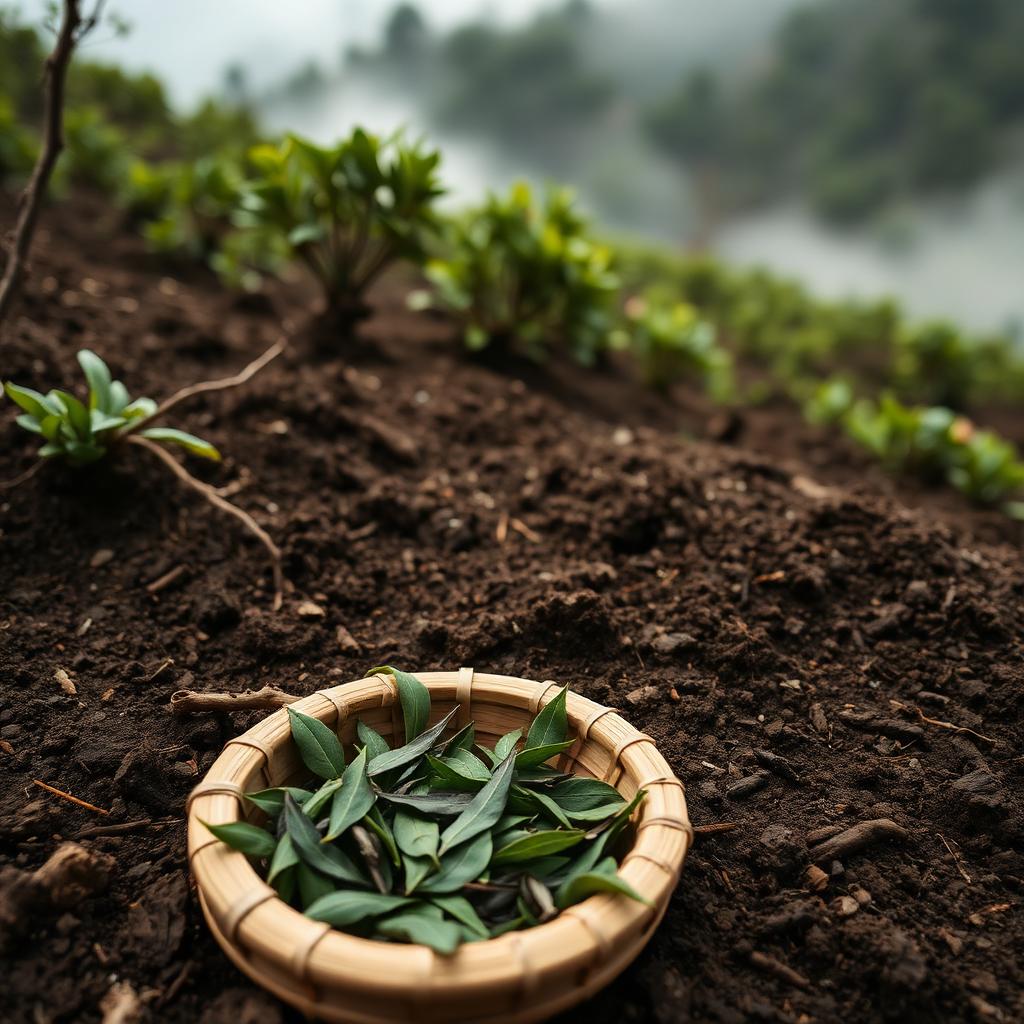
A tea's terroir is the combination of physical and biological factors that alter the chemical composition of the leaf even before it is processed: soil type, altitude, temperature range, humidity, light exposure and planted cultivar. Two Camellia sinensis leaves processed in exactly the same way, but originating from two distinct terroirs, will yield two incomparable liquors.
Soil: minerality, drainage and acidity
Camellia sinensis requires acidic soil, with a pH between 4,5 and 5,5. This acidity determines the availability of metal ions, particularly manganese and aluminium, which the plant accumulates in its leaves and which contribute to the mineral sensation on the palate. Soil that is too calcareous prevents this absorption and produces a chlorotic leaf, low in aromatic compounds.
The texture of the soil matters as much as its chemistry. The volcanic soils of Kagoshima, highly free-draining and rich in organic matter, encourage rapid growth and leaves laden with amino acids. The schist and granite soils of Fujian, poorer and more free-draining, constrain the plant: the resulting moderate water stress concentrates aromatic precursors and gives the oolongs from the region their characteristic mineral structure.
This principle of constraint is the same as that observed in viticulture. A plant under slight stress produces less biomass but a leaf denser in secondary metabolites, that is to say precisely in flavour molecules.
Altitude and mists: metabolic slowdown
At altitude, the average temperature falls by approximately 0,6 degrees every hundred metres. This cooling slows photosynthesis and lengthens the bud's growth cycle. The leaf takes longer to form, accumulates more L-theanine and soluble sugars, and develops more complex aromas.
The persistent mists of the high plateaus play a second, often underestimated role: they filter direct sunlight. Yet exposure to ultraviolet light triggers the synthesis of catechins, protective but bitter molecules. Less direct light therefore means fewer catechins and the preservation of L-theanine, which is not converted into polyphenols. This is the exact mechanism replicated by the artificial shading of gyokuro in Japan.
This is why the great green teas high-altitude, such as the Long Jing from the hills of Hangzhou, display a sweetness and length on the palate that the same cultivars planted on the plains never achieve.
The cultivar: the genetic variable
Terroir is expressed only through genetics. A cultivar is a variety selected and propagated by cuttings for its stable characteristics. The Japanese Yabukita, which covers more than 70 percent of the archipelago's cultivated area, produces a balanced and consistent leaf. Longjing 43 is early-ripening and highly aromatic. Yunnan's large-leaf Da Ye Zhong is naturally rich in polyphenols, which explains its suitability for long fermentation.
The same cultivar moved elsewhere changes its profile, and the same terroir planted with another cultivar changes its signature. The final taste is the product of this interaction, never of a single isolated factor. This is why vague origin labels, such as tea from China, have no informative value for a discerning enthusiast.
Terroir and oxidation: two distinct stages
One must distinguish what comes from the terroir from what comes from the workshop. Terroir establishes the leaf's potential: its concentration of amino acids, polyphenols and glycosidic precursors. Oxidation, roasting and rolling reveal or transform this potential, but cannot create what was not there.
A talented artisan can never redeem a leaf born of depleted soil and forced yields. Conversely, a leaf from an exceptional terroir will be ruined if poorly processed. The quality of a tea therefore lies at the intersection of these two levels, and serious sourcing requires control over both.
How to taste a terroir: the comparative method
The only way to truly perceive a terroir is through horizontal tasting: two teas from the same family, the same level of oxidation, the same dosage, the same water, the same temperature, the same duration, and only one variable, the origin. The difference then emerges with striking clarity, particularly in the finish and texture.
Our selection is based on this protocol. Each batch is tasted blind against the previous batch of the same cru before being listed, and we work only with pure teas, precisely because an added flavouring would erase the signature of the terroir we seek to convey.
These comparisons are conducted in public at the HOLLIN du Goût counter, 22 avenue de la République, 78500 Sartrouville, Monday to Saturday from 10h to 20h. There you can taste two origins side by side and leave with the cru that suits your practice.
Frequently Asked Questions (FAQ)
- Is there a controlled designation of origin for tea, as there is for wine?
- There is no international AOC for tea, but several protected geographical indications govern specific origins: Darjeeling in India, the Long Jing from Xihu in China or Uji Matcha in Japan. These protections cover the production area and sometimes the process, but they do not guarantee the quality of the lot: only tasting does.
- Why do two harvests from the same tea garden not taste the same from one year to the next?
- Because terroir includes an annual climatic factor. A rainy year dilutes the leaf's metabolites, a moderate drought concentrates them, and an early spring brings forward the first flush and alters the balance between L-theanine and catechins. Vintage therefore truly exists in tea, and the differences are most apparent in sweetness and length on the palate.
- How can a terroir tea be distinguished from an industrial tea-bag blend?
- Three signs are unmistakable. The leaf is whole or in large fragments, never reduced to dust. The label states a precise origin, a cultivar and a harvest period rather than simply a country. Finally, thetime evolves over successive infusions, whereas an industrial blend reveals everything in the first minute and then collapses.