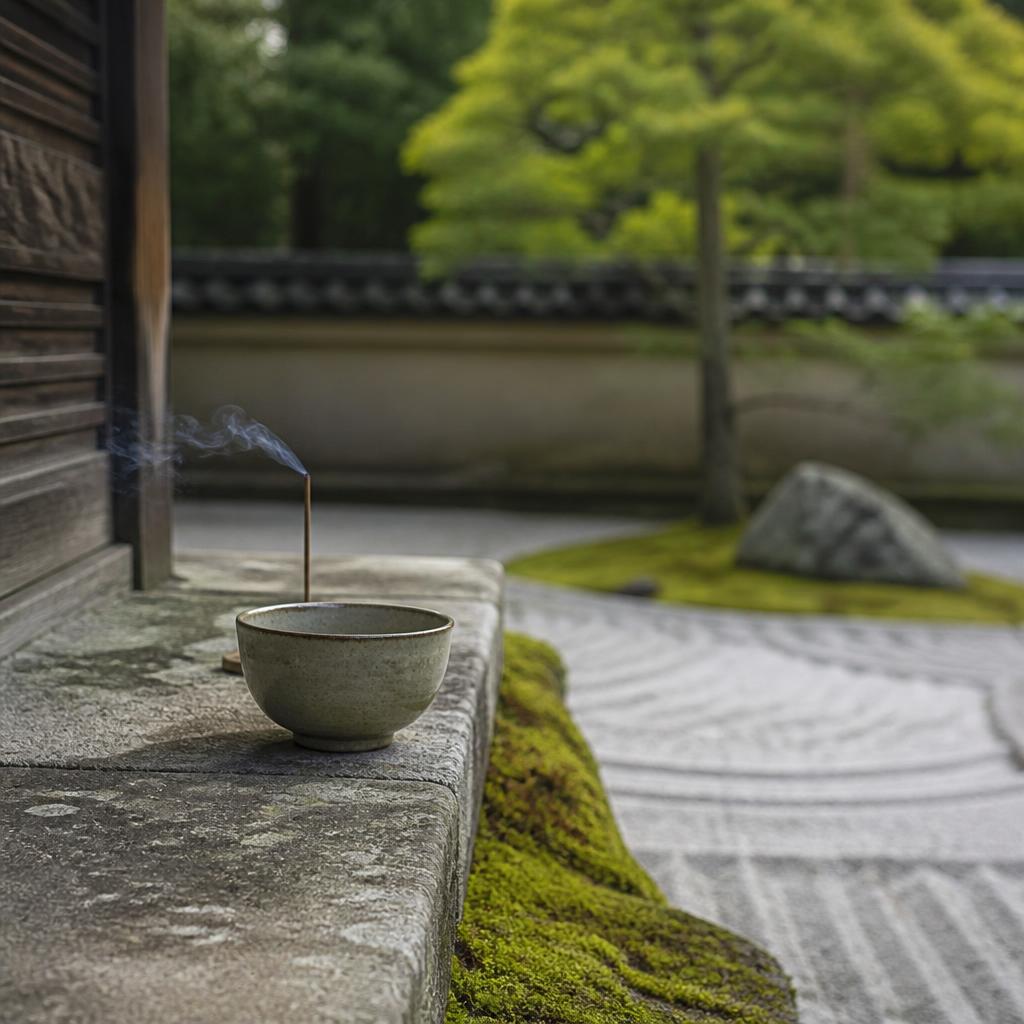
Tea in Zen Buddhism: a history of vigilance
Written by Dian VAULTIER·
In Brief
- The history of tea is inseparable from that of Zen Buddhism, which from its earliest days made it an ally of meditative practice.
- Traditional accounts place the introduction of tea into Chinese monasteries as early as the Tang dynasty, where Chan monks, the forebears of Japanese Zen, sought a way to resist d…
- HOLLIN sommelier expertise: tea in Zen Buddhism decoded by a purist Tea Maison, with no added flavourings, based in Sartrouville (Île-de-France) and shipping its grands crus worldwide.
The history of tea is inseparable from that of Zen Buddhism, which from its earliest days made it an ally of meditative practice. The monks discovered in this drink a rare biochemical combination, capable of sustaining alertness without causing agitation. This synergy between teaine and L-theanine fostered a true philosophy of gesture, known as Cha Dao, the way of tea. Tracing this history continues to illuminate our contemporary relationship with tasting.
An encounter between meditation and botany
Traditional accounts place the introduction of tea into Chinese monasteries as early as the Tang dynasty, where Chan monks, the forebears of Japanese Zen, sought a way to resist drowsiness during their long sessions of seated nocturnal meditation, or zazen.
Tea, grown near monasteries at high altitudes, offered an answer both practical and symbolic: a plant cultivated with patience, harvested with precision, then prepared through a ritualised gesture that already foreshadowed the meditative attention being sought.
The synergy between theine and L-theanine explained
Theine stimulates the central nervous system and delays the sensation of fatigue, while L-theanine, an amino acid unique to the tea plant, promotes the production of alpha brain waves associated with a state of relaxed alertness. This unique combination distinguishes tea from coffee, whose more abrupt stimulating effect can cause nervousness and agitation.
For Zen monks, this balance corresponded precisely to the state sought during meditation: a clear and attentive mind, yet free of any unnecessary tension. Tea thus became a tool as much as a drink.
From monastery to ceremony: the birth of Cha Dao
Gradually, the preparation of tea within the monastery became codified into a precise ritual, passed down from master to disciple, in which every gesture, from heating the water to presenting the bowl, carried a meditative intention. This refinement gave rise to Cha Dao in China, then directly influenced the Japanese tea ceremony, chanoyu.
This lineage explains why the contemporary tasting of tea, when practised with attention, retains an almost contemplative dimension, in which silence and the slowness of gesture recover their full meaning.
The purist selection of HOLLIN
At the counter HOLLIN du Goût, 22 avenue de la République, 78500 Sartrouville, open Monday to Saturday from 10h to 20h, we offer a selection of ceremonial matchal and green teas Japanese teas faithful to this contemplative tradition, accompanied by the guidance needed for a preparation that respects the original gesture.
Our tea masters are happy to share, upon request, the historical and gestural foundations of this practice, transforming your daily tasting moment into an instant of genuine attention.
From Chinese monastery to Japanese temple
The shared history of tea and Buddhism begins in the Chinese monasteries of the Tang, where the drink sustained long periods of seated meditation without breaking the rule of abstinence. At the end of the twelfth century, the monk Eisai brought back to Japan seeds and, above all, a practice: drinking whisked powdered tea, a preparation that would become the Matcha. His treatise on the virtue of tea made the leaf both a remedy and a discipline.
The Japanese phrase linking tea and the way of Zen is expressed in one formula: cha zen ichimi, tea and Zen have the same flavour. This is not a poetic metaphor but an identity of method. Attention to gesture, economy of means, acceptance of imperfection: the preparation of a bowl already contains the posture of meditation.
An aesthetic that became an art of living
In the sixteenth century, Sen no Rikyu stripped the ceremony of its Chinese ornaments and established wabi, the modest beauty of worn materials and irregular forms. The tea hut became more intimate, the entrance was lowered to compel everyone to bow, and raw ceramics replaced perfect porcelain. This aesthetic shift had a lasting influence on the Japanese art of living, far beyond the circle of temples.
What this history bequeaths to the contemporary drinker is a question rather than a fixed ritual: what quality of attention do we give to an ordinary task. Preparing a bowl of Matcha at home, without ceremony, observing the colour, the foam and the silence that follows, is enough to reconnect with this lineage. Our selection of matcha and our tea objects are conceived in this spirit of restraint.
To continue this exploration beyond the screen, step through the door of the HOLLIN du Goût counter, our contemporary Asian grocery located at 22 avenue de la République in Sartrouville. Here, the leaves are opened, smelled and discussed, and every recommendation is tailored to your water, your teapot and your time of day.
Frequently Asked Questions (FAQ)
- What is the difference between Chinese Cha Dao and Japanese chanoyu?
- Chinese Cha Dao favours a freer, more contemplative approach to preparation, while Japanese chanoyu codifies every gesture according to an extremely precise protocol inherited from Zen masters. Both traditions nevertheless share the same pursuit of attention and presence.
- Why is matcha particularly associated with Zen meditation?
- The Matcha, consumed as whole powder dissolved in water, provides a high concentration of L-theanine and theine, offering an effect of calm alertness particularly sought before long zazen sessions in historic Japanese monasteries.
- Can a moment inspired by Cha Dao be recreated at home?
- Yes, it is enough to consciously slow down each step: heat the water without haste, watch the leaves unfurl, serve in silence. This attention to gesture, more than the equipment used, constitutes the transferable essence of this contemplative tradition.