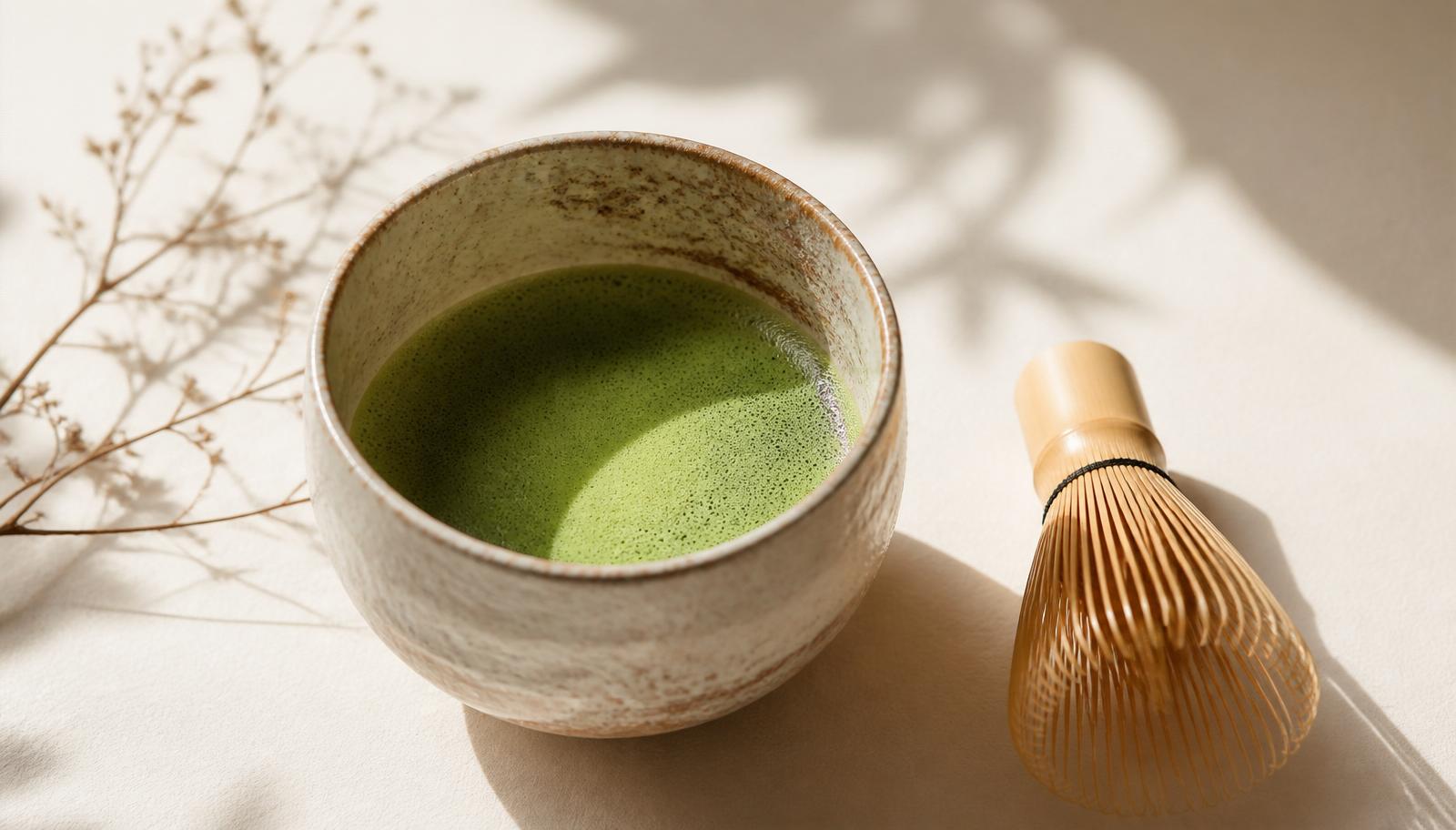
What is shaded matcha, or Kabuse?
Written by Dian VAULTIER·
In Brief
- In the hierarchy of shaded Japanese green teas, Kabuse occupies an often-overlooked middle ground, between sencha exposed to full sunlight and gyokuro shaded for an extended period.
- When tea plants are deprived of some direct sunlight, the plant responds by increasing its chlorophyll production to maximise residual photosynthesis, which i…
- HOLLIN sommelier expertise: what is shaded matcha, or Kabuse, decoded by a purist Tea Maison, with no added flavourings, based in Sartrouville (Île-de-France) and shipping its grand crus worldwide.
In the hierarchy of shaded Japanese green teas, Kabuse occupies an often-overlooked middle ground, between sencha exposed to full sunlight and Gyokuro shaded for an extended period. This technique consists of covering the tea plants with cloth for one to two weeks before harvest, altering the biosynthesis of amino acids and chlorophyll. Understanding Kabuse offers greater insight into the continuous gradation between the different categories of Japanese green tea.
The physiological mechanism of shading
When tea plants are deprived of some direct sunlight, the plant responds by increasing its chlorophyll production to maximise residual photosynthesis, intensifying the leaf’s green colour. At the same time, the synthesis of catechins, which requires significant exposure to light, slows.
This reduction in the conversion of amino acids into catechins leads to an accumulation of L-theanine in the leaf, responsible for the characteristic umami sweetness of shaded teas, particularly gyokuro and, to a lesser extent, Kabuse.
A shading period that makes all the difference
Sencha is traditionally not shaded, or only very briefly, and therefore retains a vibrant, vegetal profile, rich in catechins. Gyokuro, at the opposite end of the spectrum, is shaded for around three weeks, producing a tea with intense umami sweetness and virtually no astringency.
Kabuse, shaded for only one to two weeks, sits precisely between these two extremes: it retains a certain vegetal freshness inherited from sencha while developing additional roundness and sweetness borrowed from gyokuro.
Kabuse matcha, a powdered variation
When Kabuse leaves are dried and then stone-ground after their veins have been removed, they produce an Matcha from entry to mid-range, less intense than matcha made from pure gyokuro leaves, but offering an excellent balance between flavour and accessibility.
This type of Matcha is particularly suited to daily consumption, especially as traditionally whisked usisha, while pure gyokuro matchas remain reserved for the most exacting ceremonial preparations.
The purist selection of HOLLIN
At the HOLLIN du Goût counter, 22 avenue de la République, 78500 Sartrouville, open Monday to Saturday from 10h to 20h, we offer several grades of Matcha, from accessible Kabuse to ceremonial-grade pure gyokuro, to suit every level of practice and budget.
Our tea masters will gladly explain, with a tasting, the nuances in flavour between these different shading grades, helping you refine your choice according to your personal preferences.
Frequently Asked Questions (FAQ)
- Is Kabuse a shaded tea or a full-sun tea?
- Kabuse is a partially shaded tea, with the cloth placed over the tea plants for one to two weeks before harvest, compared with around three weeks for gyokuro. It thus falls between sencha, which is unshaded, and gyokuro, which is shaded for an extended period.
- Can Kabuse be prepared like a classic sencha?
- Yes, Kabuse is infused using parameters similar to sencha, with water at around 70 to 80 degrees Celsius and an time time of around one minute. Its slightly higher L-theanine content does, however, allow for a somewhat lower temperature without any loss of flavour.
- Is Kabuse matcha suitable for beginners?
- Yes, the Matcha made from Kabuse leaves offers an excellent introduction to matcha, thanks to its balance of vegetal freshness and umami sweetness, at a price generally more accessible than ceremonial matchas made from pure gyokuro.