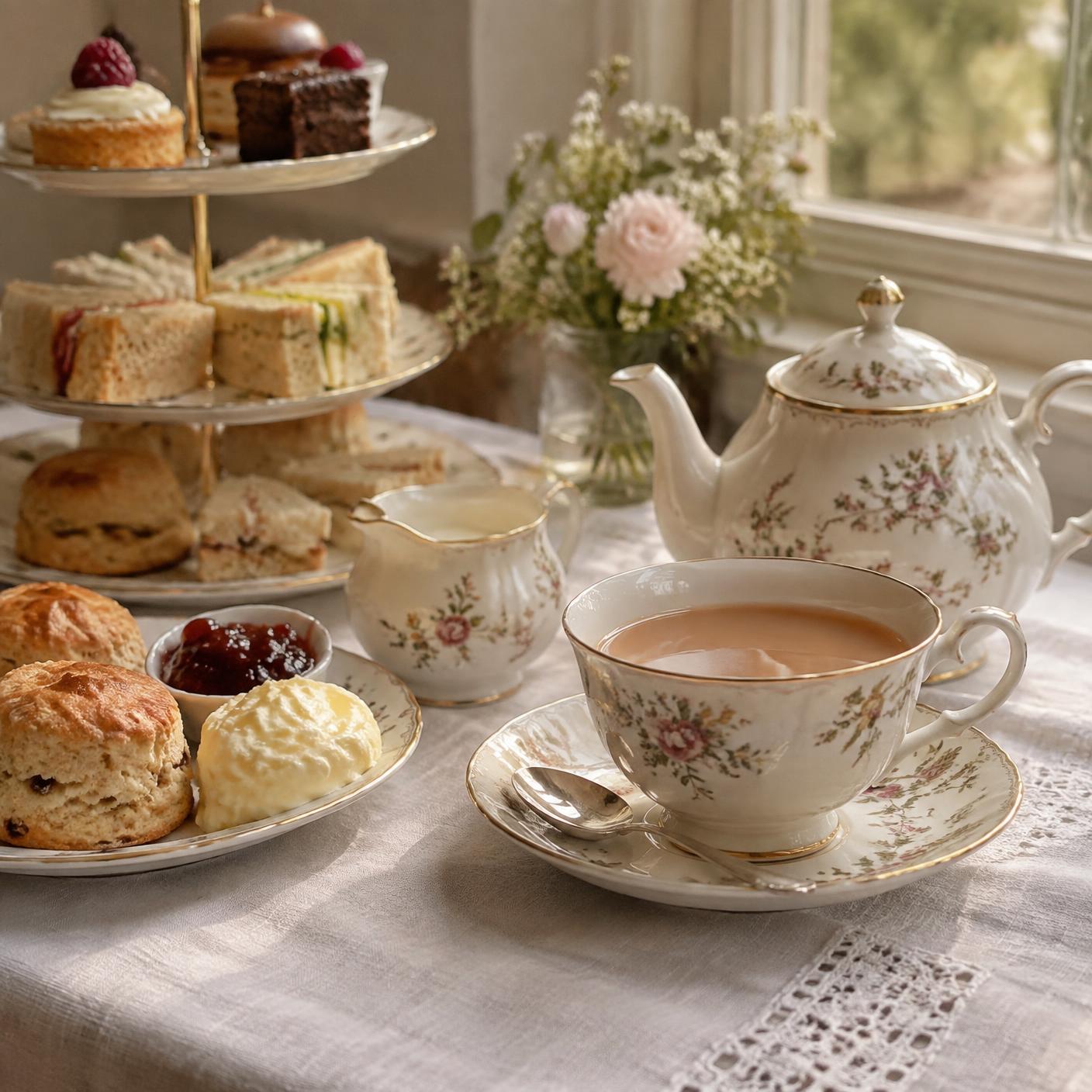
Tea time (Afternoon tea): the origins of a ritual
Written by Dian VAULTIER·
In Brief
- Afternoon tea emerged in the early nineteenth century among the English aristocracy, in response to the long interval between lunch and a late dinner.
- In the nineteenth century, English dining customs called for a light lunch in the middle of the day and dinner served late, sometimes after eight o'clock.
- The HOLLIN sommelier's expertise: afternoon tea decoded by a purist Tea House, with no added flavourings, based in Sartrouville (Île-de-France) and shipping its finest teas worldwide.
Afternoon tea emerged in the early nineteenth century among the English aristocracy, in response to the long interval between lunch and a late dinner. Anna Maria Russell, seventh Duchess of Bedford, is traditionally credited with its creation, having tea and light refreshments served at around four o'clock. The ritual was then codified into three sweet and savoury courses and spread to middle-class drawing rooms before becoming a cultural symbol. It relies on black teas fully oxidised, robust enough to stand up to butter, cream and pastries.
From aristocratic hunger to social ritual
In the nineteenth century, English dining customs called for a light lunch in the middle of the day and dinner served late, sometimes after eight o’clock. This interval left affluent households hungry, and they found an answer both practical and social in an afternoon snack accompanied by tea. The Duchess of Bedford is said to have had tea, bread, and butter brought to her private rooms before extending the invitation to her friends.
The success of this practice was also due to the growing availability of black tea imported from China and later India, whose price fell throughout the century thanks to the colonial plantations of Assam and Ceylon. Drinking tea ceased to be a luxury reserved for crowned heads and became a marker of domestic respectability, associated with fine porcelain and silverware.
The codification of the service
Victorian afternoon tea is structured into three courses: delicate cucumber or smoked salmon sandwiches, scones served with clotted cream and jam, followed by pastries and small cakes. This progression from savoury to sweet mirrors the sequence of a full meal, condensed into a convivial hour.
The tea served with this selection must have enough tannic structure not to be overwhelmed by the richness. English Breakfast-style blends, Assam teas, and mid-elevation Ceylon teas became natural choices, their pronounced astringency cleansing the palate between bites.
A ritual turned cultural heritage
Today, afternoon tea has moved far beyond its original aristocratic setting to become a tourist and gastronomic experience, offered in grand hotels as well as independent tea houses. Its social dimension remains intact: it is still a shared, unhurried moment, where conversation takes precedence over speed of consumption.
Recreating this ritual at home requires neither silverware nor a three-tier stand. A simple tea service with a suitable teapot and a time properly measured is enough to recapture the spirit of this suspended moment, provided you choose a black tea whose structure holds its own alongside sweet preparations.
The purist selection of HOLLIN
The Maison HOLLIN offers a range of black teas selected for their tannic structure and their ability to accompany an English-style service, from full-bodied Assams to livelier Ceylons. Each tea is chosen for its genuine flavour potential, without resorting to synthetic flavourings intended to imitate butter or caramel.
These teas can be tasted and compared at the HOLLIN du Goût counter, located at 22 avenue de la République in Sartrouville, open Monday to Saturday from 10h to 20h. The team offers guidance on the quantity and duration oftime suited to an afternoon service, whether enjoyed alone or shared.
Frequently Asked Questions (FAQ)
- Which tea should you choose for a successful afternoon tea at home?
- Choose a black tea well structured, such as an Assam or English Breakfast blend, whose natural astringency counterbalances the richness of the scones and cream. Teas that are too delicate or lightly oxidised risk being completely masked by the sugar and fats in the service.
- Should milk be added to afternoon tea?
- Historical English custom allows it, particularly to soften the astringency of a full-bodied Assam. This choice remains personal: a quality tea, properly infused, is equally enjoyable on its own. Milk is best suited to highly tannic teas infused for a little longer.
- How long should black tea be infused for afternoon tea?
- Generally allow three to five minutes at ninety-five degrees for a black tea standard, adjusting according to the leaf. A time that is too short will produce a tea overwhelmed by the pastries, while steeping for too long will excessively heighten the bitterness.