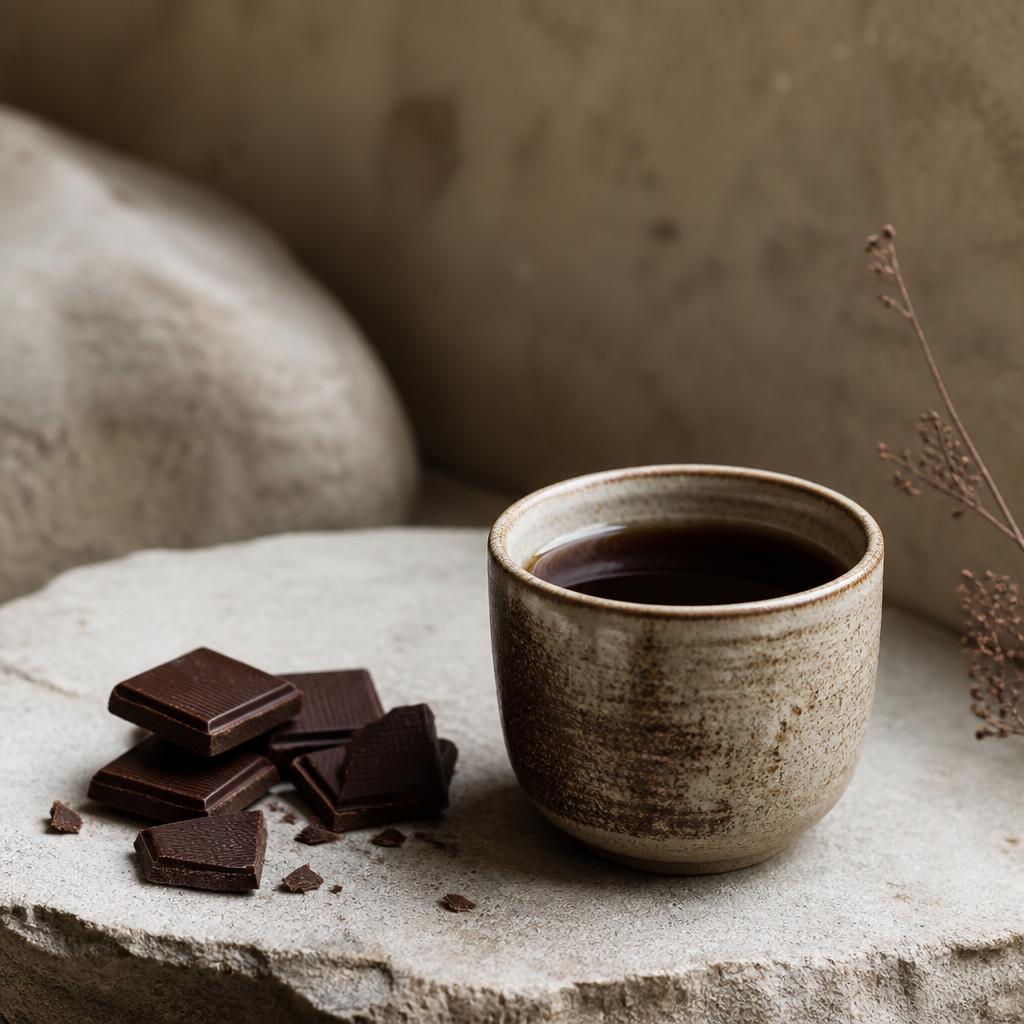
Pairing tea and chocolate: method and logic
Written by Dian VAULTIER·
In Brief
- Chocolate is a formidable opponent for tea: its fat coats the palate, its bitterness saturates the receptors, and its sugar overwhelms delicate aromas.
- The first mechanism is cleansing the palate.
- The expertise of the HOLLIN sommelier: pairing tea and chocolate, explained by a purist Tea House based in Sartrouville (Île-de-France), offering teas with no added flavourings and shipping its finest teas worldwide.
Chocolate is a formidable opponent for tea: its fat coats the palate, its bitterness saturates the receptors, and its sugar overwhelms delicate aromas. A successful pairing is not a matter of chance but of two precise physical mechanisms, tannic cleansing and aromatic bridging.
Two mechanisms govern every tea and chocolate pairing
The first mechanism is palate cleansing. Cocoa butter melts at 34 degrees, just below the temperature of the mouth, and forms a lipid film on the tongue that persists after swallowing. The tea's tannins, by precipitating proteins in the saliva, produce an astringent sensation that breaks through this film and restores the taste buds' receptiveness.
The second is aromatic bridging: identifying a molecule shared by both products to create continuity. The roasting of cocoa and that of a Oolong roasted tea or a hojicha generate the same families of compounds through the Maillard reaction, particularly pyrazines, with notes of hazelnut, toast and cocoa.
One rule of intensity frames both approaches: the more powerful partner should never exceed the other by more than one degree. A white tea paired with an 85 per cent chocolate simply disappears, and the reverse is true of a lapsang paired with white chocolate.
Dark chocolate: power calls for structure
Dark chocolate containing 70 to 80 per cent cocoa brings a pronounced bitterness, a fruity acidity depending on the origin of the beans, and its own tannic weight. It calls for a tea capable of matching this intensity without adding a redundant bitterness, which would result in a dry, tiring combination.
The black teas from China, Yunnan red or Keemun, work remarkably well: their notes of cocoa, malt and honey extend the chocolate rather than competing with it. A ripe Pu-erh is the other great answer, its earthy roundness absorbing the astringency of the cocoa with almost perfect continuity.
For a particularly tangy dark chocolate, made with beans from Madagascar or Ecuador, a black tea from Ceylon with lively acidity creates a resonant pairing. Smoked teas, meanwhile, require caution: they overpower most chocolates and pair well only with a very intense or lightly salted ganache.
Milk chocolate and white chocolate: seek contrast
Milk chocolate brings sugar and milk proteins, with caramelised notes and little bitterness. The risk is a flat pairing, two forms of sweetness combining without contrast. The answer is a Oolong roasted tea, whose notes of toasted hazelnut and residual acidity enliven the whole.
A hojicha, green tea Japanese tea roasted at high temperature and low in caffeine, offers another elegant answer: its toasted wood profile echoes the caramelisation of the milk while bringing welcome dryness to the finish.
White chocolate, containing no cocoa solids, is simply cocoa butter, sugar and milk. It requires a pronounced contrast: a green tea vibrant, vegetal tea, or a white tea floral tea whose acidity cuts through the richness. A black tea full-bodied tea, meanwhile, systematically overpowers it.
The five-step tasting protocol
Begin with the tea on its own, to commit its profile to memory. Then take a square of chocolate and allow it to melt on the tongue without chewing, until the cocoa butter has completely dissolved. Then take a sip of tea and hold it in your mouth for three seconds before swallowing.
Finally, observe the finish: a good pairing leaves the palate clean and creates a third aroma, absent from either product when tasted separately. A poor pairing leaves a metallic bitterness or a lingering greasy film. Serve the tea hotter than usual, at around 85 degrees, as the heat helps dissolve the lipid film.
The purist selection of HOLLIN
We work exclusively with pure teas, and this constraint is particularly beneficial when pairing with chocolate: a tea flavoured with vanilla or caramel duplicates what the chocolate already brings, and the pairing loses all interest. Oxidation, roasting and terroir are what create the notes of cocoa and malt.
To test several combinations, visit the HOLLIN du Goût counter, 22 avenue de la République, 78500 Sartrouville, Monday to Saturday from 10h to 20h. Tasting the same chocolate with three successive teas is the best exercise for training the palate.
Frequently Asked Questions (FAQ)
- Which tea should be served with an 85 percent dark chocolate without overwhelming the palate?
- A ripe Pu-erh or a black tea from Yunnan, both round and gently astringent. At this cocoa level, the bitterness is already at its peak: adding a highly tannic tea results in a dry, tiring combination. Instead, look for a tea that brings texture and notes of honey or earth to envelop the bitterness of the chocolate.
- Can matcha be paired with chocolate?
- Yes, but only with white chocolate or a very mild milk chocolate. The Matcha has a vegetal bitterness and a thick texture that compete directly with the cocoa solids: when paired with dark chocolate, the two forms of bitterness combine without complementing one another. With white chocolate, however, the pairing is clean and the contrast successful.
- Should tea be drunk before or after eating the chocolate?
- Afterwards, always. Cocoa butter leaves a greasy film on the tongue that would mask the aromas of a tea drunk afterwards if the order were reversed. Allow the chocolate to melt completely, then drink: the precise role of the tannins is to cleanse this film and prepare the palate for the next bite. Serve the tea a little hotter than usual.