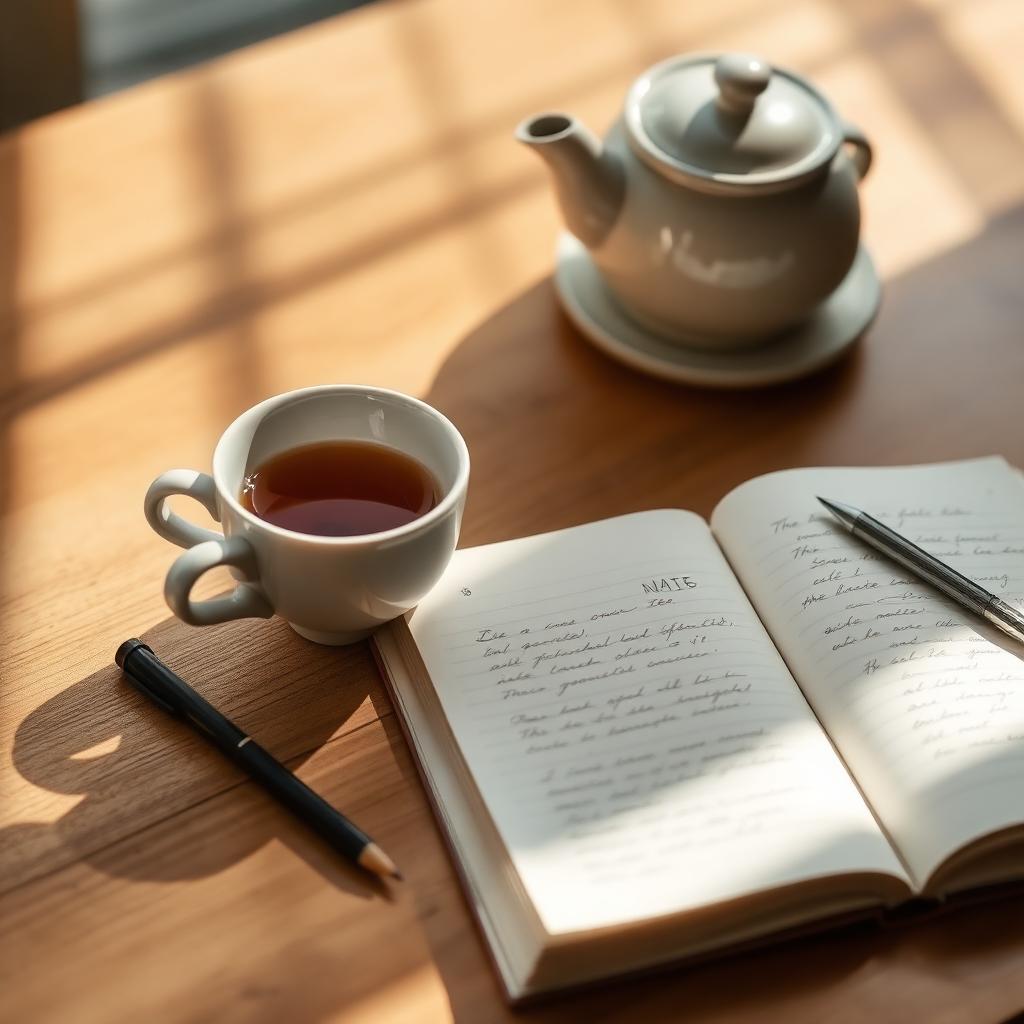
Which tea should you drink in the afternoon to stay focused?
Written by Dian VAULTIER·
In Brief
- The afternoon dip in alertness is not a lack of willpower: it is a documented circadian dip that occurs six to eight hours after waking.
- The human circadian rhythm includes a second dip in alertness, generally between 13h and 16h, independent of meals.
- HOLLIN sommelier expertise: which tea to drink in the afternoon to stay focused, explained by a purist Tea House based in Sartrouville (Île-de-France), offering only pure teas with no added flavorings and shipping its fine teas worldwide.
The afternoon dip in alertness is not a lack of willpower: it is a documented circadian dip that occurs six to eight hours after waking. Tea addresses it better than coffee, provided you choose the right family and the right extraction. The key lies in a precise biochemical ratio between caffeine and L-theanine, and in a time window to observe if you want to sleep that same evening.
The afternoon dip is a physiological phenomenon, not a weakness
The human circadian rhythm includes a second dip in alertness, generally occurring between 13h and 16h, independently of meals. Sleep pressure, driven by the accumulation of adenosine in the brain since waking, then reaches a level sufficient to slow sustained attention, working memory and fine motor precision.
Caffeine acts on this mechanism by binding to adenosine receptors without activating them: it takes their place, prevents the fatigue signal from getting through, but does not eliminate the underlying sleep debt. This is why a massive dose of coffee produces a brief peak followed by a marked crash, when the molecule detaches from the saturated receptors.
Tea delivers the same molecule, in a different molecular context. The Camellia sinensis leaf contains tannins that slow the intestinal absorption of caffeine, and an amino acid, L-theanine, that modulates its effect on the nervous system. The physiological result is not a peak but a plateau, better suited to three hours of continuous work.
The pairing of caffeine and L-theanine, the engine of calm concentration
L-theanine is a glutamate analogue capable of crossing the blood-brain barrier. Electroencephalography studies associate its ingestion with an increase in alpha-wave activity, a marker of a state of relaxed alertness—that of a focused musician or an absorbed reader—far removed from stress.
Combined with caffeine, it lessens the latter's anxiety-inducing component: alertness rises, while nervous tension and an accelerated heart rate remain contained. This combination is precisely what coffee, which contains no theanine, cannot replicate, whatever the quality of its extraction.
L-theanine content depends on cultivation and processing. Teas shaded before harvest, gyokuro and kabusecha, contain more of it, because shading slows the conversion of theanine into catechins under the effect of light. Lightly oxidized teas also preserve this balance better than heavily oxidized teas.
Oolong, the structural compromise for the afternoon
A Oolong moderately oxidized, between 30 and 50 percent, occupies an ideal position: it retains a significant share of theanine and floral aromas while developing the structure and length on the palate of a more oxidized tea. Its liquor has body, without weighing on digestion in the middle of the day.
Its second quality is practical: a Oolong rolled tea withstands five to eight herbal teas successive. This spreads your caffeine intake over three hours instead of taking it all at once, further smoothing the alertness curve and avoiding the sensation of a sudden drop-off.
White tea and shaded green tea, for sensitive constitutions
If you are sensitive to caffeine, a white tea infused at 80 degrees for two minutes delivers a gentle extraction, with a high proportion of theanine relative to the caffeine released. The liquor remains delicate, honeyed, and gentle on an empty stomach in the late afternoon.
A green tea shade-grown Japanese offers the other path: more umami, denser, it establishes a very clear state of concentration. Infuse it at only 60 or 70 degrees. Beyond that, you extract bitter catechins in large quantities and a greater share of caffeine, shifting the profile toward stimulation.
What is the cut-off time to avoid compromising sleep
The half-life of caffeine in a healthy adult is between four and six hours, and can reach nine hours in slow metabolizers or when using oral contraception. In practical terms, a cup consumed at 17h still leaves half of its load in circulation at 22h, at the very moment the body is preparing to fall asleep.
The cautious rule is to set the last caffeinated cup eight hours before bedtime, or 15h for a bedtime of 23h. After that limit, switch to an time without Camellia sinensis, or to a deliberately under-extracted tea, reducing the duration to forty seconds.
A more refined method is to adjust the rinse: because caffeine is highly soluble, discarding an initial twenty-second infusion removes a notable fraction of the load while retaining most of the aromas, which are less soluble. The technique is not perfect, but it usefully reduces intake at the end of the day.
Infusion protocol for three hours of work
Measure 4 grams ofOolong for 150 millilitres of water at 90 degrees in a gaiwan. Infuse for thirty seconds the first time, then add ten seconds with each time. Keep the teapot within reach: the act of pouring again structures the work session into sequences, supporting attention as much as the molecule does.
Avoid the large mug filled only once and left to cool: the leaves remain in prolonged contact with the water, bitterness rises, and caffeine intake becomes massive, then nonexistent. The logic of tea for work is the opposite of coffee: divide rather than concentrate.
Drink still water alongside it. Tea is not dehydrating at usual doses, but the dry-mouth sensation caused by tannins encourages more cups, and therefore more caffeine, when a simple glass of water is enough to relieve it.
The purist selection of HOLLIN
We taste every batch before listing it and work only with pure teas. For the afternoon, we favor Oolongs with measured roasting and green teas whose bitterness remains controlled at low temperatures, because a tea that overwhelms the palate always ends up being infused for too short a time and loses its appeal.
Frequently Asked Questions (FAQ)
- Which tea should you drink at 16h when you are sensitive to caffeine but need to stay focused?
- A white tea steeped at 80 degrees for two minutes, or a Oolong whose first twenty-second infusion you discard. In both cases, the caffeine load is reduced while L-theanine, less soluble at low temperatures but present in quantity, continues to support attention. If sensitivity is high, a time without Camellia sinensis remains the only completely sleep-neutral option.
- Does green tea really contain less caffeine than coffee for the same cup size?
- Yes, under usual conditions. A cup of green tea of 150 millilitres releases approximately 25 to 40 milligrams of caffeine, compared with 80 to 120 milligrams for the same volume of filter coffee. The dry leaf contains more caffeine than the coffee bean by equal weight, but much less is used per cup and the extraction is far less aggressive.
- Can the same leaves be reinfused all afternoon without risking bitterness?
- Yes, provided you do not leave the leaves to steep between infusions: empty the teapot or gaiwan completely each time you serve. Leaves that are damp but not immersed will keep for three to four hours without noticeable deterioration. By contrast, leaves left in water continuously release tannins and catechins, and the liquor becomes astringent from the second cup onward.