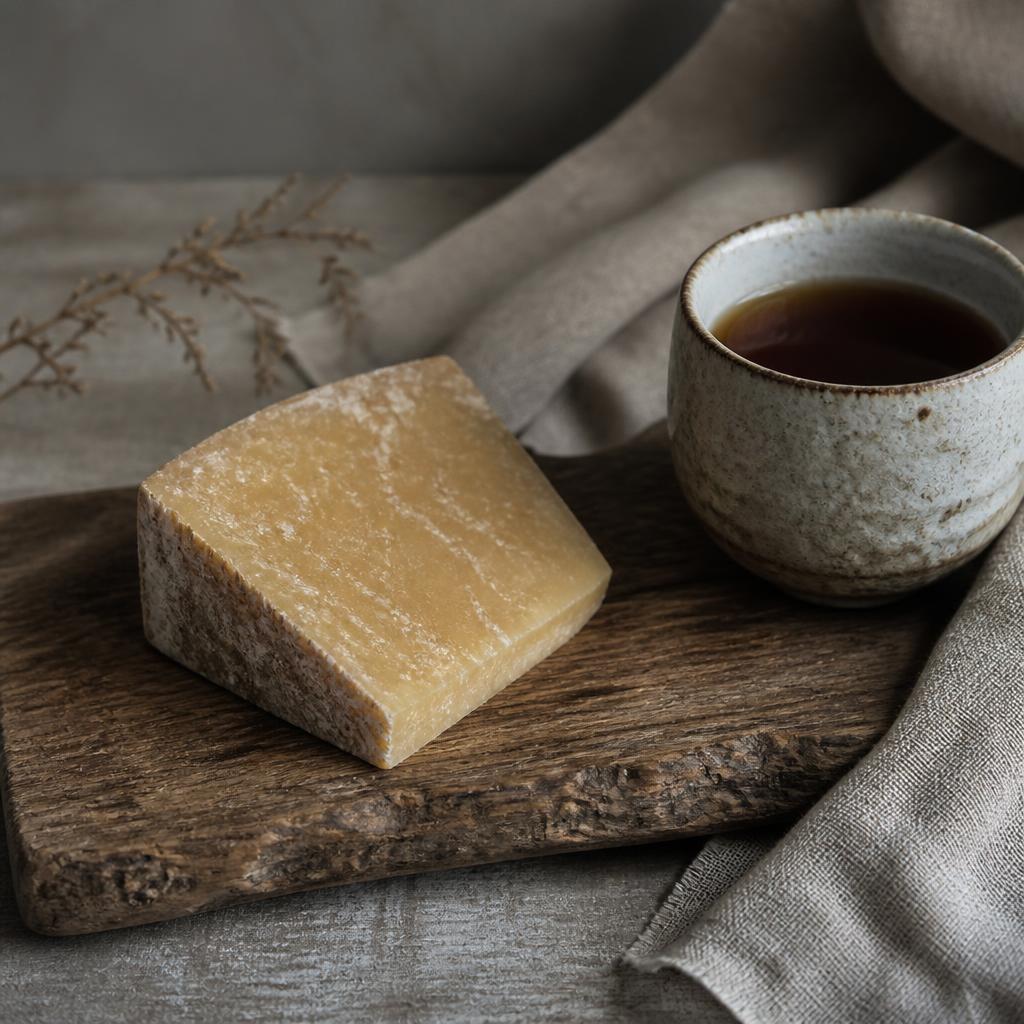
How to pair tea and cheese?
Written by Dian VAULTIER·
In Brief
- The pairing of tea and cheese is based on the same principles as those governing food and wine pairings: complementarity or contrast between textures, fats, and aromatic compoun…
- Tea tannins have an affinity for proteins and lipids, allowing them to cut effectively through the richness of a cheese while cleansing the palate between each bi…
- HOLLIN sommelier expertise: how to pair tea and cheese, explained by a purist Tea Maison, with no added flavourings, based in Sartrouville (Île-de-France) and shipping its grand crus worldwide.
The pairing of tea and cheese is based on the same principles as those governing food and wine pairings: complementarity or contrast between textures, fats, and aromatic compounds. The caffeine and tannins in tea play a role comparable to that of acidity or tannin in wine, cleansing the palate of the cheese's fats. A methodical exploration of these pairings reveals combinations that are often subtler than those with wine.
The chemical principles of pairing
Tea tannins have an affinity for proteins and lipids, allowing them to cut effectively through the richness of a cheese while cleansing the palate between each bite. This controlled astringency acts as a counterpoint to the creaminess of the cheese.
The umami notes of certain green teas Japanese, carried by L-theanine and glutamic acid, resonate with the umami flavours developed as cheeses mature, creating a pairing based on complementarity rather than contrast.
Pairing suggestions by cheese family
Cooked pressed cheeses and smoked black teas
Firm cooked cheeses, with their assertive and sometimes slightly caramelised character, pair well with a smoked black tea whose roasted notes extend the cheese's aromatic complexity without overpowering it.
Fresh goat's cheeses and Japanese green teas
The tangy liveliness of a fresh goat's cheese finds a natural echo in the vegetal freshness and light astringency of a sencha or a gyokuro, whose marine and herbaceous notes balance the cheese's lactic acidity.
Blue cheeses and oolongs
Powerful, salty blue cheeses call for a tea capable of matching their intensity without fading into the background. An oolong heavily roasted, with notes of dried fruit and honey, offers the necessary counterpoint to this power.
The moderate astringency of theoolong, combined with its aromatic richness, creates a bridge on the palate between the saltiness of the cheese and the sweetness of the tea, for a pairing with a remarkably long finish.
The purist selection of HOLLIN
Our HOLLIN du Goût counter, 22 avenue de la République, 78500 Sartrouville, open Monday to Saturday from 10h to 20h, regularly organises tasting workshops pairing our teas with a selection of matured cheeses, allowing everyone to experience these pairings first-hand.
Our tea masters are also available in our boutique to create a bespoke pairing based on the cheese you wish to showcase at a meal or reception.
Why tea succeeds where wine hesitates
Cheese leaves a persistent richness and saltiness on the palate. Wine responds with acidity and alcohol, but can sometimes struggle with washed-rind cheeses and the most powerful blues. Tea has another lever: dry tannicity, free from sugar and alcohol, which cleanses the mouth without adding volume. The warm liquor melts the fat rather than setting it, while the umami of certain leaves enters into direct dialogue with the amino acids released during maturation.
This mechanism explains the precision of certain pairings. A Japanese green tea rich in theanine with a fresh goat cheese creates a sense of milky continuity. A black tea from China, lightly smoked, with a twenty four-month comté extends the nutty notes. A ripe pu erh with a blue cheese sets its earthy depth against the mushroom's pungency.
Building and serving a cheese board
Serving the tea at around sixty degrees in the cup, in small portions, makes it possible to follow one bite with another without overwhelming the palate. Progress from the mildest to the most assertive, rinsing the mouth with water between families. Three teas are enough for five cheeses: a lively green, a structured black, a deep dark tea.
The most common pitfall istime too long, which turns tannicity into bitterness and overwhelms the cheese. A slightly under-extracted liquor is preferable, and can then be adjusted. Our black teas provide the most versatile foundation for this type of table, while lovers of contrast will go as far as green teas for fresh cheeses.
To continue this exploration beyond the screen, step through the door of the HOLLIN du Goût counter, our contemporary Asian grocery located at 22 avenue de la République in Sartrouville. Here, the leaves are opened, smelled and discussed, and every recommendation is tailored to your water, your teapot and your time of day.
Frequently Asked Questions (FAQ)
- Which tea should be paired with a Comté aged for 24 months?
- A long-aged Comté, with notes of hazelnut and caramel, pairs remarkably well with a oolong roasted or a black tea from China with malty notes. The tea's aromatic richness extends the cheese's complexity without overpowering it.
- Can tea replace wine with a cheese board?
- Yes, tea is a fitting alternative, particularly for guests who do not drink alcohol. Tea families should be varied according to the cheeses served, reserving the fullest-bodied teas for blue cheeses and the most delicate for fresh cheeses.