Which tea with a pastry?
Written by Dian VAULTIER·
In Brief
- A good tea and pastry pairing is no matter of chance.
- Tannins and catechins, including EGCG, bind to the proteins and fats in cream or butter.
- HOLLIN sommelier expertise: which tea with a pastry, decoded by a purist Tea House devoted to pure tea, based in Sartrouville (Île-de-France) and shipping its grands crus worldwide.
A good tea and pastry pairing is no matter of chance. It relies on three forces: the tannins that cleanse the palate of fat, theacidity that lightens the sugar, and the aromas that echo one another. Well chosen, the liquor extends the dessert rather than overpowering it.
The chemical principles of pairing
The tannins and catechins, includingEGCG, bind to the proteins and fats in cream or butter. This reaction produces the sensation of a « rinsed » palate, ready for the next bite. The richer a dessert, the more it calls for a structured cup.
Three pairing strategies:
- contrast: an astringent tea against a rich dessert;
- resonance: shared notes, such as the hazelnut notes of a oolong roasted tea and a praline;
- refreshment: a lively, floral tea against a sweet dessert.
Chocolate and intense desserts
Dark chocolate calls for a cup capable of holding its own. The black teas with high oxidation, rich in theaflavins, or smoked teas, extend the bitterness of the cocoa. An aged pu'erh brings an earthy depth that pairs with a fondant.
Discover our black teas for chocolate desserts. Their notes of malt and dried fruit find a natural echo.
Fruit, tarts and acidity
A red berry or lemon tart benefits from a tea that is both floral and lively. A spring Darjeeling, with a clear, lightly muscatel liquor, highlights the acidity without sharpening it.
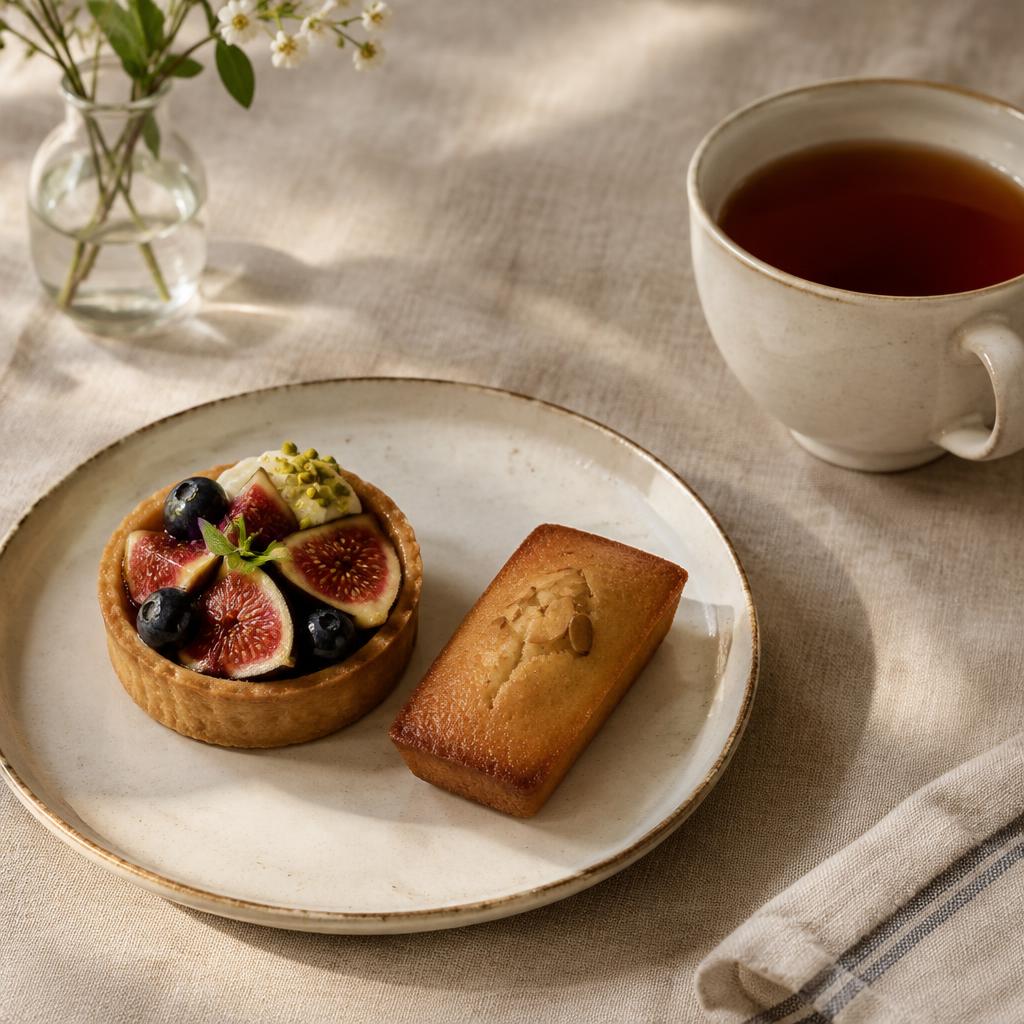
For a fig tart or an autumn fruit tart, a oolong moderately oxidised tea creates a resonance of ripe fruit and honey. Our Oolong teas offer this entire palette, from floral to woody.
Almonds, butter and French pastries
Financiers, madeleines and croissants share aromas of brown butter, produced by the Maillard reaction. A oolong roasted or a hojicha picks up exactly these toasted notes.
Quick guide:
- financier: oolong roasted or hojicha;
- honey madeleine: white tea of buds;
- mille-feuille: green tea Japanese, which cuts through the cream;
- rose macaron: a jasmine tea flower-scented.
Creams, mousses and dairy desserts
Desserts made with cream or mascarpone call for a green tea with pronounced umami. The L-Theanine brings a roundness that complements the dairy notes, while the slight bitterness lightens the texture. A Matcha served as usucha pairs perfectly with a panna cotta or cheesecake.
Always serve the tea a little warmer than the dessert is cold: the contrast in temperature awakens the aromas.
Temperature, order and quantity
A pairing is also shaped by the way it is served. The cup should be served before the first bite, to prepare the palate. A sip of tea between two bites resets the taste buds and allows all the nuances of the dessert to emerge once again.
A few serving guidelines:
- a 100 to 150 ml cup is enough for an individual dessert;
- the tea is brewed a little stronger than usual to stand up to the sugar;
- avoid sweetening the tea, as it would lose its role as a counterpoint;
- begin with the lightest dessert when several are served.
Why tannins love fat
The astringency of a tea comes from the ability of tannins to bind to proteins in saliva. When paired with a cream or ganache, these tannins also bind to the proteins and lipids in the dessert. The result: the cup tastes smoother than on an empty stomach, and the dessert lighter than it is.
It is the same principle as pairing red wine with a rich dish. A low-tannin tea, such as a white tea delicate, may, on the contrary, be overwhelmed by a pastry that is too rich. Theoxidation and the cultivar determine the tannic structure, and therefore the strength of the pairing.
Finally, the L-Theanine brings an umami roundness that extends the milky and buttery notes. It is what makes the pairing between a green tea Japanese and a cream so natural.
Creating your pairing at the counter
At HOLLIN taste counter, our contemporary Asian grocery store in Sartrouville, we help you choose the tea that will accompany your next afternoon treat or festive meal. Bring us your dessert idea, and we will suggest the cup.
Dian VAULTIER, for HOLLIN.
Frequently Asked Questions (FAQ)
- What tea should be served with a chocolate dessert?
- A black tea full-bodied, a smoked tea or a pu'erh. Their tannic structure stands up to the richness and bitterness of the cocoa.
- Which tea with a fruit tart?
- A lively, floral tea, such as a spring Darjeeling, or a oolong for autumn fruits.
- Does green tea pair well with pastries?
- Yes, especially with creamy desserts. Its umami and slight bitterness balance the richness of the cream.