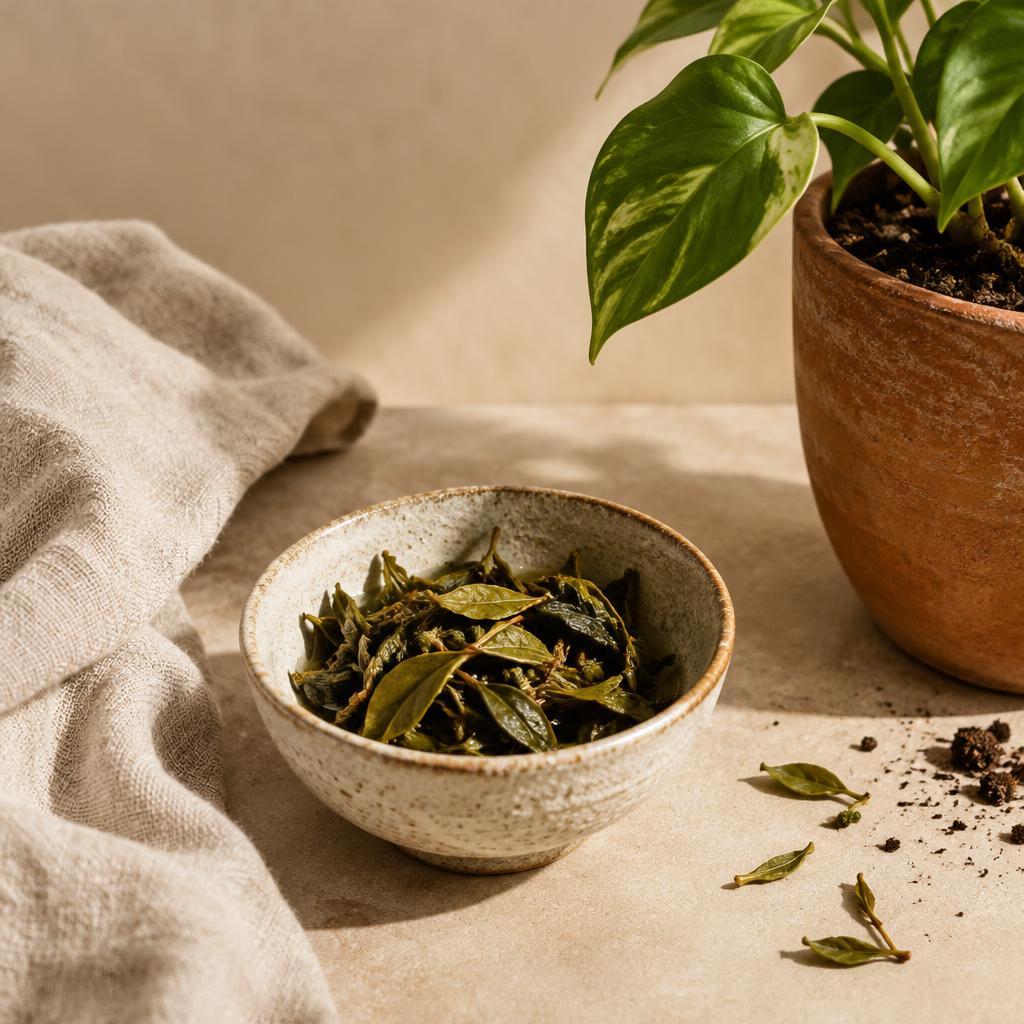
What to do with infused tea leaves?
Written by Dian VAULTIER·
In Brief
- An infused tea leaf has lost much of its caffeine and aromas, but not all of them.
- After two or three infusions, the leaf has released most of its caffeine and L-Theanine.
- HOLLIN sommelier expertise: what to do with infused tea leaves, explained by a purist Tea House specialising in pure tea, based in Sartrouville (Île-de-France) and shipping its finest teas worldwide.
A tea leaf once infused, has lost much of its caffeine and its aromas, but not all of them. It retains fibre, nitrogen, a proportion of polyphenols and a remarkable capacity for absorption. Before discarding it, here is how to give it a useful second life, both at home and in the garden.
What remains in the leaf
After two or three herbal teas, the leaf has released most of its caffeine and its L-Theanine. However, the catechins most closely bound to the plant cell wall, including some EGCG, remain partially present, along with cellulose, proteins and minerals.
This residual matter explains most of its uses: nitrogen-rich for the soil, odour-absorbing, and with mild antioxidant activity for cooking.
In the garden and for plants
The leaves are an excellent addition to compost: they decompose quickly and balance carbon-rich waste such as cardboard or dead leaves.
Direct uses:
- light mulch around acid-loving plants (hydrangeas, azaleas);
- mixed into potting soil, once dried, to improve its texture;
- watering water: a highly diluted, cooled brew, once a month.
Avoid placing damp leaves in a thick layer in an indoor pot: they could develop mould.
In cooking
Whole leaves of green tea, once infused, can be cooked like a tender vegetable. In Japan and China, they are seasoned with soy sauce and sesame, or incorporated into an omelette. Their residual bitterness is mild, their texture meltingly soft.
Whole-leaf our green teas leaves are particularly well suited to this use. Heavily oxidised teas, which are more fibrous, are less suitable for direct consumption but can flavour a broth or rice.
At home
Dried on a tray for two days, the leaves become a natural odour absorber . Placed in a small dish in the refrigerator or inside a shoe, they capture some of the odorous compounds thanks to their polyphenols and their porous structure.
Other simple ideas:
- rub a cutting board with damp leaves to reduce the smell of garlic;
- add a handful of dried leaves to a fabric sachet for a drawer;
- use the last tea liquor, cold, to clean a mirror.
One last cold infusion
Before any recycling, consider a time cold infusion. Place the leaves in 500 ml of fresh water, for two to four hours in the refrigerator. The slow extraction draws out little tannins and yields a liquor mild, ideal at the end of the day. The rolled oolongs respond particularly well to this method.
Which leaves for which use
Not all infused leaves are equal when it comes to a second life. Their structure depends on the family, the degree ofoxidation and the size of the leaf:
- green teas whole-leaf: tender, ideal for cooking;
- rolled oolongs: thick leaves, perfect fortime cold infusion and compost;
- black teas: rich in tannins, useful for deodorising;
- tea bags: compost only if the bag is plastic-free.
Whole-leaf Matcha do not enter this cycle, since the powder is consumed in its entirety. It is a way of using the whole leaf, without any residue.
Hygiene precautions
An infused leaf is damp and rich in organic matter. Left in a closed teapot, it can develop microorganisms within a few hours, especially in summer. For any culinary use, use it the same day and refrigerate it if necessary.
For household uses, always dry the leaves before storing them. Spread in a thin layer on a tray or tea towel, in the open air, they dry in one to two days. A musty smell indicates that they should be composted.
Finally, do not reuse leaves that have been left in water for several hours for another time hot infusion. The tannins and theEGCG continue to be extracted and make the liquor astringent. It is better to prepare a time cold infusion as soon as the session ends.
The L-Theanine and caffeine having been largely extracted during the first herbal teas, leaves intended for compost or the garden offer no particular nutritional benefit to humans: they mainly nourish the soil.
A thoughtful approach at the counter
At HOLLIN taste counter, our contemporary Asian grocery in Sartrouville, we favour whole leaves for this reason too: they can be infused several times, then return to the earth. Visit us to discover the teas best suited to these herbal teas successive infusions.
Dian VAULTIER, for HOLLIN.
Frequently Asked Questions (FAQ)
- Are infused tea leaves good for plants?
- Yes, in compost or as a light mulch, especially for plants that prefer slightly acidic soil. Avoid thick, damp layers in pots.
- Can infused tea leaves be eaten?
- Whole leaves of green tea can be eaten, seasoned or in an omelette. Use them the same day.
- Can tea bags be composted?
- Only if they are made of plastic-free paper. Many tea bags contain synthetic fibres that do not break down. Loose-leaf tea avoids this problem.