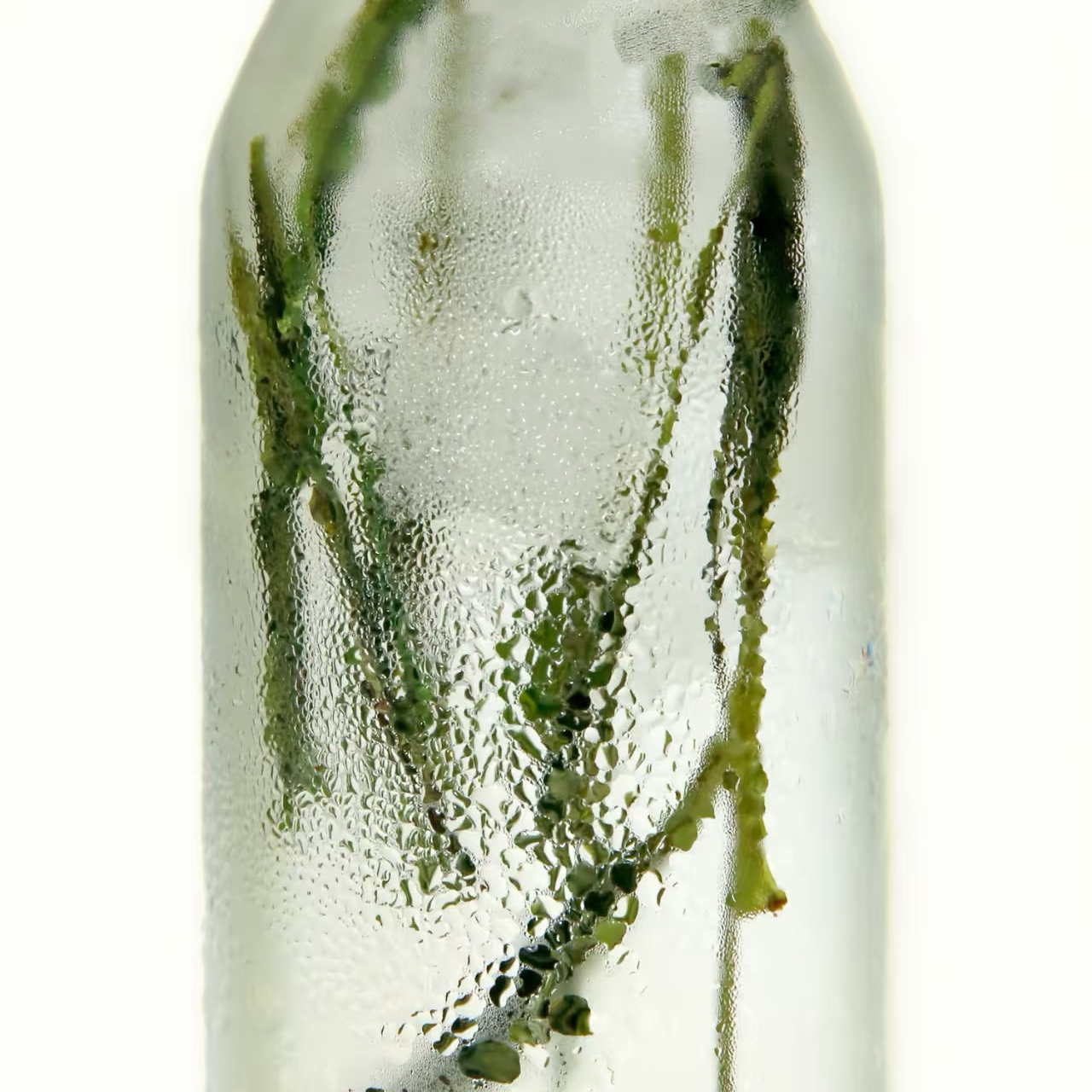
Why do some teas reveal another facet when cold?
When we think of tea, we almost always imagine a steaming cup. Yet some leaves tell a different story when slowly infused in cold water. Cold infusion is not simply a summer trend. It is another way to discover tea.
Why cold-infuse tea?
At low temperatures, the leaves release their aromas more slowly. The vegetal notes become softer, the bitterness fades and a subtle natural sweetness emerges. The mouthfeel is rounder, fresher and particularly pleasant in summer. Cold infusion also contains less caffeine than a hot infusion, making it an ideal alternative throughout the day.
Which teas should you choose?
Not all teas respond in the same way. At HOLLIN, we particularly recommend:
Green teas
Sencha, Long Jing and jasmine green teas reveal a delicate vegetal freshness, with a softer texture than when infused hot. Their floral and vegetal notes become more refined, while bitterness naturally diminishes.
White teas
Aiguille Fine buds and Fleur Blanche leaves develop an almost silky sweetness. Their expression becomes more subtle, more ethereal, revealing naturally sweet notes.
Lightly oxidised oolongs
Teas such as Tie Guan Yin or our Narcisse are also particularly well suited to cold infusion. Their texture becomes lighter, the floral notes gain in breadth and the finish remains exceptionally clean and refreshing.
How do you prepare a cold infusion?
Use approximately 4 to 5 g of tea for 500 ml of cold water. Place the leaves in a carafe or bottle, then leave to infuse for 6 to 8 hours in the refrigerator. Strain the leaves before tasting. No ice is needed: the tea is naturally fresh and balanced.
Another way to discover tea
The same tea can tell two stories. Hot infusion reveals its depth, structure and most intense aromas. Cold infusion brings out the delicacy, freshness and natural sweetness of the leaves. Depending on the season, the time of day or simply what you feel like, sometimes all it takes is a change in water temperature to rediscover a tea entirely.