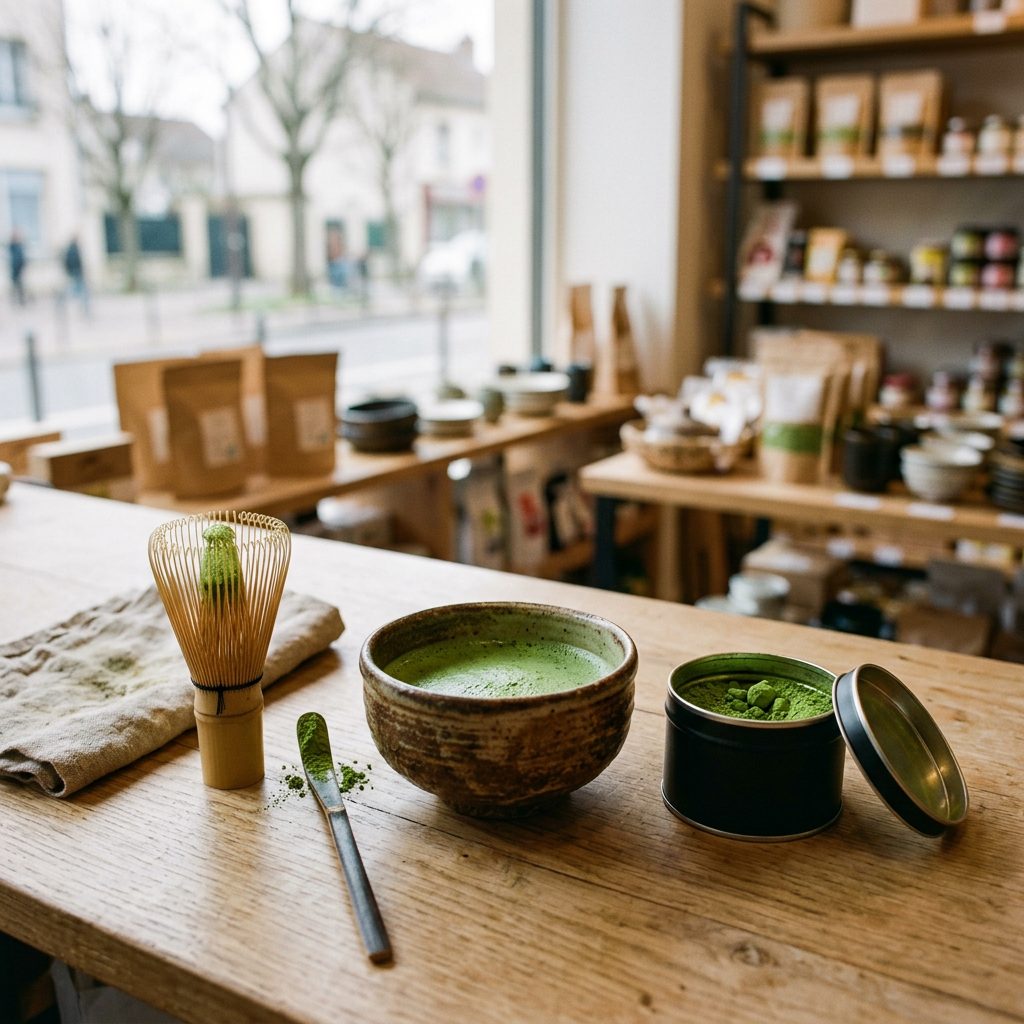
The importance of the measuring spoon for loose-leaf tea
Written by Dian VAULTIER·Published
In Brief
- Dosing loose-leaf tea is a technical step that is too often overlooked, even though it directly determines the infusion's balance of flavours.
- Each gram of leaf contains a specific amount of catechins, caffeine and amino acids, whose release into the water depends directly on the mass of leaves used.
- HOLLIN sommelier expertise: the importance of the measuring spoon for loose-leaf tea, explained by a purist Maison of pure tea, based in Sartrouville (Île-de-France) and shipping its grands crus worldwide.
Dosing tea in loose-leaf form is a technical step that is too often overlooked, even though it directly determines the balance of flavours of thetime. A calibrated spoon makes it possible to faithfully reproduce an optimal leaf-to-water ratio specific to each category of tea. This article explains the biochemical and practical considerations involved in precise dosing.
The link between dosing and tannin extraction
Each gram of leaf contains a specific amount of catechins, caffeine and amino acids, whose release into the water depends directly on the mass of leaves used. Overdosing leads to excessive tannin extraction, resulting in bitterness and astringency that mask the desired aromatic nuances.
Conversely, underdosing produces a diluted liquor, unable to reveal the complexity of the terroir and the transformation craftsmanship specific to a quality lot.
Reference ratios by category
For a green tea, a dose of around two grams per one hundred millilitres of water provides a balanced starting point, to be adjusted according to the grade and fineness of the leaves. A black tea, more robust in tannins, generally tolerates a slightly lower dose to avoid excessive astringency.
The Oolong, due to its herbal teas multiple and short, often requires a more generous dose with a small volume of water, a practice known as the gongfu cha method.
Why avoid approximate measurement by eye
The density of the leaves varies considerably depending on how they are rolled, their size and their degree of oxidation, making any visual estimate unreliable. A spoon calibrated to a standardised volume compensates for this variability better than an approximate pinch.
A gesture in service of consistency in flavour
Consistent dosing makes it possible to faithfully reproduce the same tasting experience from one preparation to the next, an essential criterion for objectively appreciating how the same lot evolves over successive herbal teas successive infusions.
It also limits waste, a significant consideration for rare teas whose cost per gram can be high and whose every leaf deserves to be fully appreciated.
The purist selection of HOLLIN
The counter HOLLIN du Goût, located at 22 avenue de la République in Sartrouville, is open Monday to Saturday from 10h to 20h. We offer precision accessories, including calibrated measuring spoons, to guide every enthusiast towards more precise preparation.
Practical advice on the appropriate ratio for each reference is systematically provided at the time of purchase, so that each tea can fully reveal its potential from the very first time.
Frequently Asked Questions (FAQ)
- What is the ideal ratio for loose-leaf green tea?
- A dose of around two grams per one hundred millilitres of water provides a balanced starting point for most green teas, to be adjusted slightly according to the fineness of the leaves and the grade of the lot concerned.
- Why does my tea become bitter even with the right infusion time?
- Overdosing the leaves, even with the correcttime time, leads to excessive extraction of catechins and tannins, resulting in pronounced bitterness that masks the tea's aromatic nuances.
- Is a standard teaspoon suitable for dosing tea?
- No, because the density of the leaves varies greatly depending on how they are rolled and their size, making any approximate measurement unreliable. A measuring spoon calibrated to a standardised volume guarantees far greater consistency.