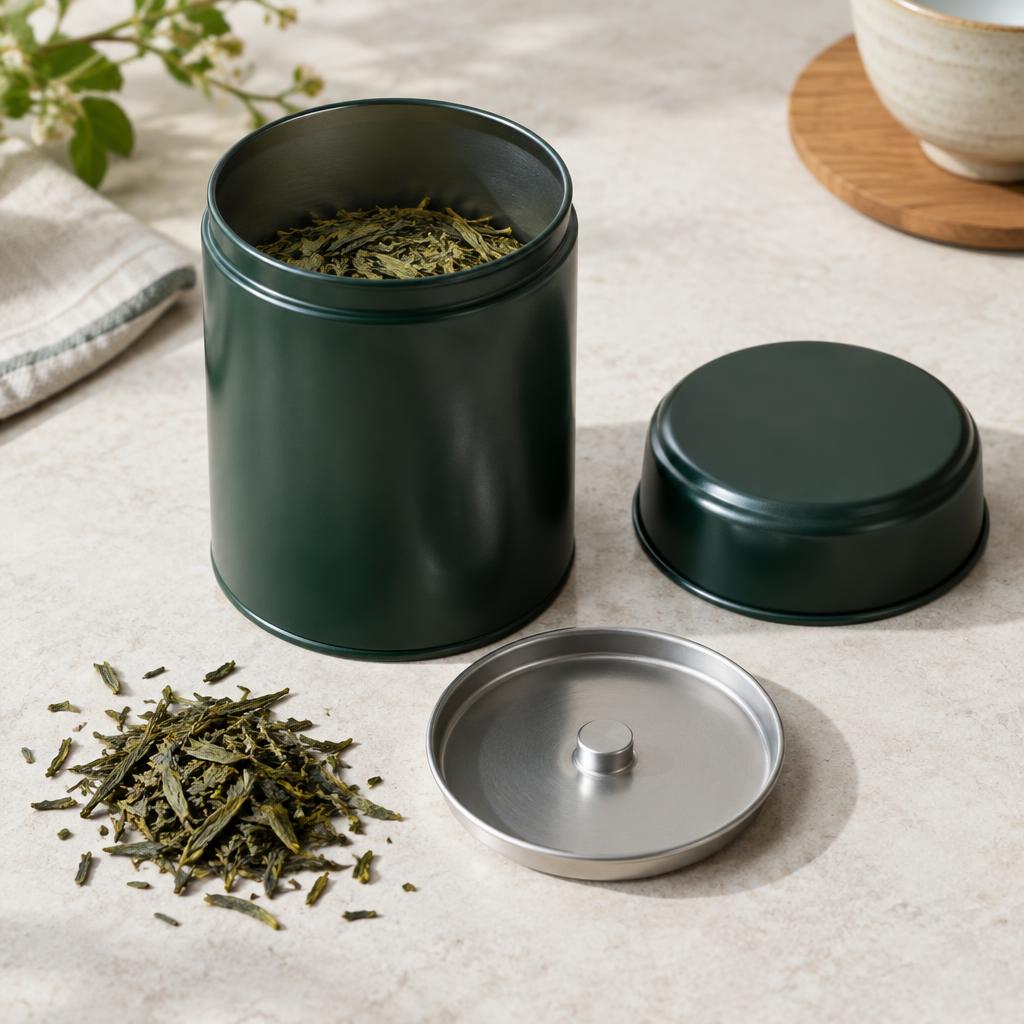
À quoi sert une boîte à thé double couvercle?
Written by Dian VAULTIER·Published
In Brief
- Une boîte à thé double couvercle sert à limiter les échanges entre les feuilles et leur environnement.
- Ce contenant possède généralement un couvercle intérieur emboîté dans l’ouverture et un couvercle extérieur qui recouvre l’ensemble.
- L'expertise du sommelier HOLLIN : à quoi sert une boîte à thé double couvercle décrypté par une Maison de Thé puriste, en thé pur, basée à Sartrouville (Île-de-France) et expédiant ses grands crus dans le monde entier.
A boîte à thé double couvercle sert à limiter les échanges entre les feuilles et leur environnement. Son intérêt dépend toutefois de son ajustement, de son matériau et de vos habitudes. Deux couvercles ne garantissent pas une fermeture hermétique: pour bien conserver le thé, il faut surtout un contenant sec, propre, protecteur et facile à refermer.
À quoi sert une boîte à thé double couvercle?
This container generally has an inner lid fitted into the opening and an outer lid that covers the entire assembly. The first provides an additional closure; the second protects this opening and completes the system. The inner lid does not need to touch the leaves. Therefore, do not try to compress a bulky tea to bring it closer to this part.
Actual effectiveness comes from the quality of the contacting surfaces, their fit, and, depending on the model, a seal. A single-lid caddy with a good closure may provide better protection than a poorly fitted double-lid caddy. To compare them, examine how much play the lids have, their stability once in place, and how easily you can replace them correctly.
What the caddy protects against, and what it does not guarantee
Le thé séché est hygroscopique: il absorbe l’humidité de son environnement. Il peut aussi capter des odeurs étrangères. Une boîte sèche, opaque et bien fermée limite ces expositions, sans rendre les feuilles insensibles aux conditions de stockage. Gardez donc le contenant loin de la vapeur de cuisson, du café, des épices et des produits ménagers.
Il faut distinguer l’<a href='https://fr.wikipedia.org/wiki/Brunissement_enzymatique' target='_blank' rel='noopener noreferrer'>oxydation enzymatique</a> intervenant dans la transformation de certains shaded Japanese green de leur détérioration lente pendant le stockage. Le vieillissement domestique ne se résume pas à la poursuite de cette étape de fabrication. L’air, la lumière, l’humidité et la chaleur peuvent altérer les qualités sensorielles, mais une boîte ne bloque pas toute évolution. Le Cultivar, la fabrication et les conditions de stockage expliquent ensemble le profil de la Liquor: le contenant protège les feuilles, sans créer une qualité absente au départ.
Un contenant adapté à la quantité restante réduit l’espace de tête, c’est-à-dire le volume libre au-dessus des feuilles. Cela ne garantit ni l’absence d’oxygène ni une durée précise de conservation. Lorsque votre réserve diminue beaucoup, envisagez une boîte plus petite, mais évitez les transvasements répétés uniquement pour gagner quelques centimètres d’espace.
Comparing materials and closures
An opaque metal caddy is suitable if it is intended for food contact and has no corrosion or damaged interior coating. Do not infer its composition solely from its appearance. For glazed ceramic, also check that it is food-safe and that the glaze is in good condition. In both cases, the material can never compensate for a closure with a great deal of play.
Glass should not be systematically ruled out. A clean, dry, tightly sealed food-grade jar may be suitable in a genuinely dark cupboard. On a lit shelf, choose an opaque container. The original protective packaging, carefully resealed, may also be preferable to a pretty box that does not close properly: compare the actual protection rather than the presentation.
- Vérifiez que le contenant est prévu pour les aliments et ne sent rien à vide. • Inspectez les rebords, le joint éventuel et les deux couvercles. • Choisissez un volume cohérent avec votre consommation, sans tasser les feuilles. • Consultez <a href='/collection/objets-pour-le-the'>les objets pour le thé</a> en gardant ces critères pratiques comme grille de comparaison.
Establish an effective storage routine
Before filling it for the first time, follow the manufacturer’s cleaning instructions. If washing is permitted, allow the body, rims and each lid to dry completely before adding the tea. Moisture hidden in a groove negates the benefit of the system. Discard any container with a persistent odor that remains noticeable after cleaning and drying.
Scoop out the leaves with a completely dry spoon, away from the kettle and steaming cups. Immediately close both lids, without trapping leaves along the contact surfaces. Store the box in a cupboard at a moderate temperature, away from the oven and sunlight. For this everyday use, avoid the refrigerator, which makes condensation more difficult to manage.
Étiquetez le contenant avec le nom du thé, sa date d’achat ou d’ouverture et ses indications de préparation. Ne mélangez pas systématiquement un fond ancien avec un nouveau sachet: vous perdriez vos repères. Pour <a href='/category/tea'>our teas en feuilles</a>, comme pour toute autre référence, conservez les informations de l’emballage afin de suivre les recommandations propres au produit.
Diagnose an odor or a disappointing cup
If the leaves smell of a spice or coffee, first examine where they are stored and the odor of the empty box. Move them away from sources of odors and change containers if necessary. A better seal may limit further contamination, but it will not reliably remove an odor that has already been absorbed. If there is visible mold or a suspicious musty odor, do not consume the tea.
Une tasse amère ou faible ne prouve pas que la conservation a échoué. La température de l’eau, la durée d’time et la quantité de feuilles influencent l’extraction. Reprenez les indications du produit, puis modifiez un seul paramètre à la fois. Notez le résultat: cette comparaison permet de distinguer un problème de préparation d’une perte de caractère.
For a white tea, n’appliquez pas une température unique à toutes les références. Commencez par ses propres instructions; si la tasse paraît trop âpre, essayez une time plus courte en gardant le reste identique. Vous pourrez ensuite tester une eau moins chaude. La concentration en caféine varie également: un thé blanc n’est pas nécessairement dépourvu de caféine.
Choose according to how you use it at the counter
To compare your current box with another solution, come to the HOLLIN du Goût counter, a contemporary Asian grocery store in Sartrouville, with the container’s dimensions and your tea’s information. Explain where you store it, how often you open it and what is bothering you: odor, difficulty closing it or a cup that has become less expressive.
The right choice remains the one you will use correctly every day. Prioritize a reliable closure, an odor-free food-safe interior, and a suitable size rather than a double lid chosen solely for its appearance. Above all, reassess your storage and preparation before attributing any variation in taste to the container. Text signed Dian Vaultier.
Frequently Asked Questions (FAQ)
- Le couvercle intérieur doit-il toucher les feuilles?
- No. It is generally placed inside the opening of the container and does not need to rest on the tea. Keep it in its intended position, without compressing the leaves or forcing the container closed.
- Deux couvercles rendent-ils automatiquement une boîte hermétique?
- No. Airtightness depends on the design, the fit, and the condition of the surfaces or any seal. A well-designed single closure may offer better protection than a poorly fitted double lid.
- Combien de temps peut-on conserver le thé dans cette boîte?
- There is no universal storage duration guaranteed by the double lid. Follow the instructions on the packaging and take into account the tea, its initial condition, and the storage conditions. A protective container limits exposure, without restoring leaves that have already deteriorated.