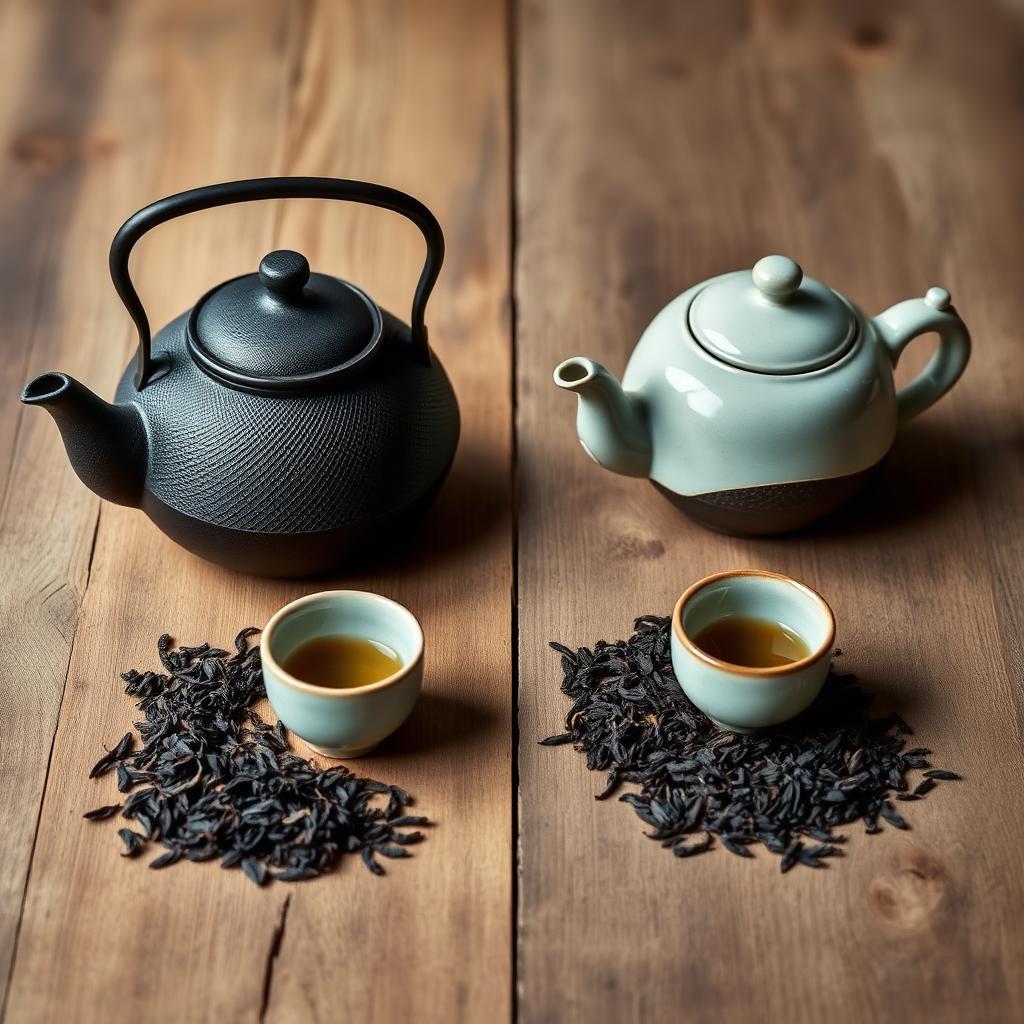
Cast-iron or ceramic teapot: which should you choose for your teas
Written by Dian VAULTIER·
In Brief
- The vessel shapes the taste. The choice between cast iron and ceramic directly affects the water temperature, extraction speed and therefore the liquor.
- Of Japanese origin, the enamelled cast-iron teapot is a powerhouse of heat retention.
- HOLLIN sommelier expertise: cast-iron or ceramic teapots decoded by a purist Tea House, with no added flavourings, based in Sartrouville (Île-de-France) and shipping its grand crus worldwide.
The vessel shapes the taste. The choice between cast iron and ceramic directly affects the water temperature, extraction speed and therefore the liquor.
The cast-iron teapot (tetsubin): absolute thermal inertia
Of Japanese origin, the cast-iron teapot enamelled teapot is formidable at retaining heat. It is robust, virtually indestructible, and suited to long herbal teas.
It is particularly recommended for teas that require hot water (90 to 95 °C), such as black teas and herbal teas winter. In return, its high heat retention can overbrew a delicate green tea.
The ceramic teapot (kyusu, yixing): the memory of clay
Clay offers a subtler approach. If porous, it retains the aromas of successive teas and develops a patina over time. It is perfectly suited to green teas and Oolongs delicate.
Porcelain-type ceramic, meanwhile, remains neutral: it is the ideal vessel for discovering a new cru without interference.
Quick comparison
Cast iron: excellent heat retention, heavy, ideal for black teas, Pu Erh and herbal teas.
Ceramic: moderate heat retention, lightweight, ideal for green teas, whites, Oolongs.
The best choice, honestly, is to have two, each dedicated to a family of tea. Visit us in Sartrouville to handle the models and feel the difference in weight and balance.
Frequently Asked Questions (FAQ)
- What should you know about cast-iron or ceramic teapots?
- The vessel shapes the taste. The choice between cast iron and ceramic directly affects the water temperature, extraction speed and therefore the liquor. Of Japanese origin, the enamelled cast-iron teapot is a powerhouse of heat retention.
- How does HOLLIN select its teas when it comes to cast-iron or ceramic teapots?
- We taste every batch before listing it and work exclusively with pure teas. Oxidation, roasting and terroir are what create the notes: sourcing therefore focuses on the artisan's craft, not on added flavourings.
- Where can you discover and taste these teas in Île-de-France?
- At the HOLLIN du Goût counter, 22 avenue de la République, 78500 Sartrouville, open Monday to Saturday from 10h to 20h. There, you can smell the dry leaves, compare several grand crus and leave with the batch suited to your practice. Orders are also shipped throughout France and internationally.