Matcha vs classic green tea: what shading really changes
Written by Dian VAULTIER·
In Brief
- Matcha is not ground green tea. It is an entirely different cultivation method, cultivar, process, and mode of consumption.
- Around three weeks before harvest, tea plants destined for matcha are covered with shade cloths.
- The expertise of the HOLLIN tea sommelier: Matcha vs classic green tea decoded by a purist Tea Maison, with no added flavorings, based in Sartrouville (Île-de-France) and shipping its grand crus worldwide.
The Matcha is not a green tea ground. It is an entirely different cultivation method, cultivar, process, and mode of consumption. Here is what each of these parameters changes.
Shade cultivation: the secret of Matcha
Around three weeks before harvest, the tea plants destined for Matcha are covered with shade cloths. Deprived of sunlight, the leaves produce high levels of chlorophyll and concentrate L-theanine, the amino acid that gives Matcha its umami and characteristic calming effect.
The green tea classic, meanwhile, grows in full sunlight. It develops more catechins, pronounced vegetal notes and a more marked bitterness. Two flavour profiles from the same parent plant: Camellia sinensis.
Two opposing ways of encountering the leaf
Choosing between the two, without setting them against each other
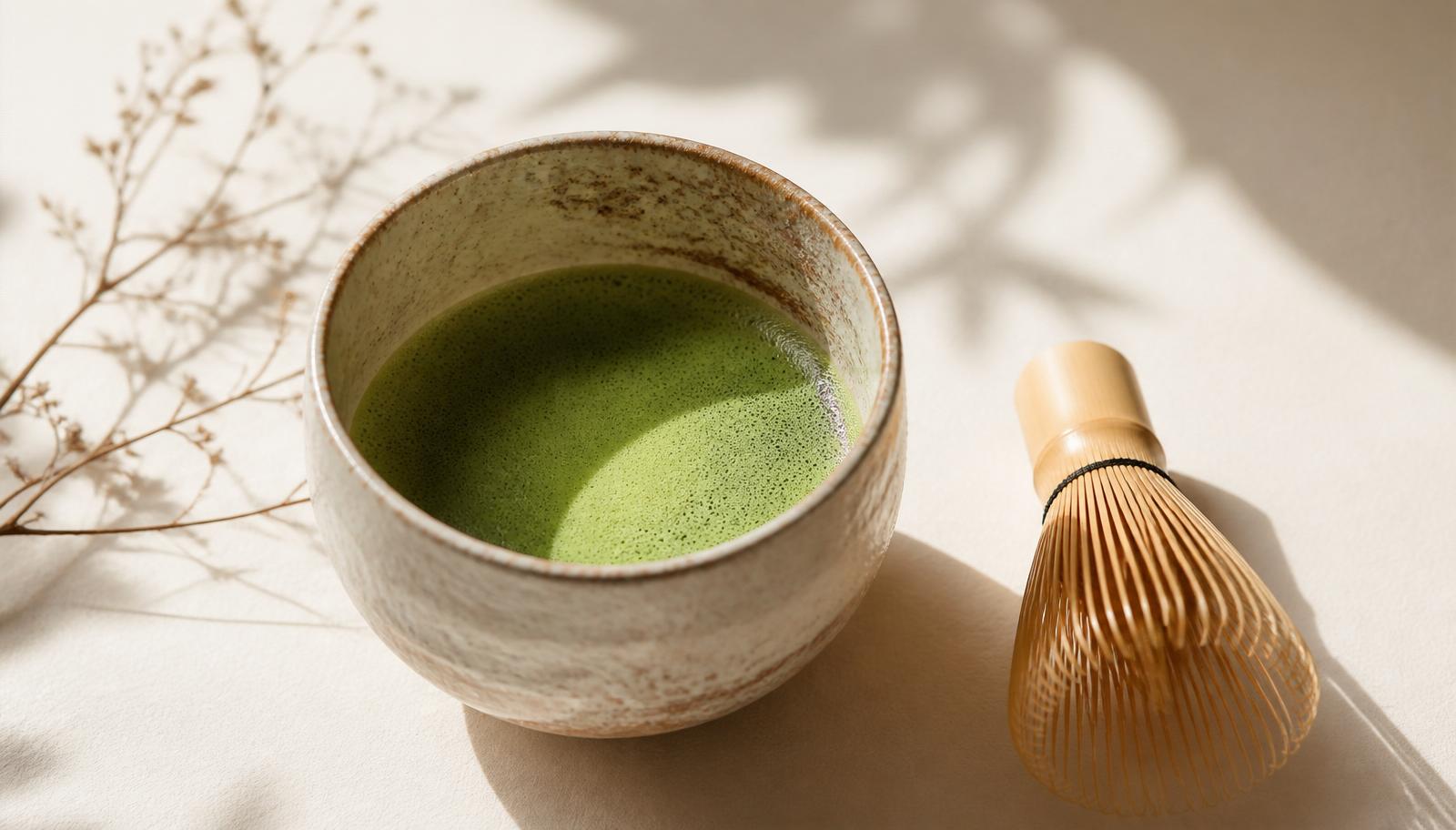
A green tea first-flush tea is suited to a contemplative tasting, over several herbal teas successive infusions. A Matcha is suited to a short ritual, prepared with a Chasen, often at the start of the day or before a session of focused work.
We offer both worlds in Sartrouville: chawan bowls, chasen, ceremonial matcha and Everyday Matcha for regular use. Visit the Hollin du Goût counter to watch the preparation live.