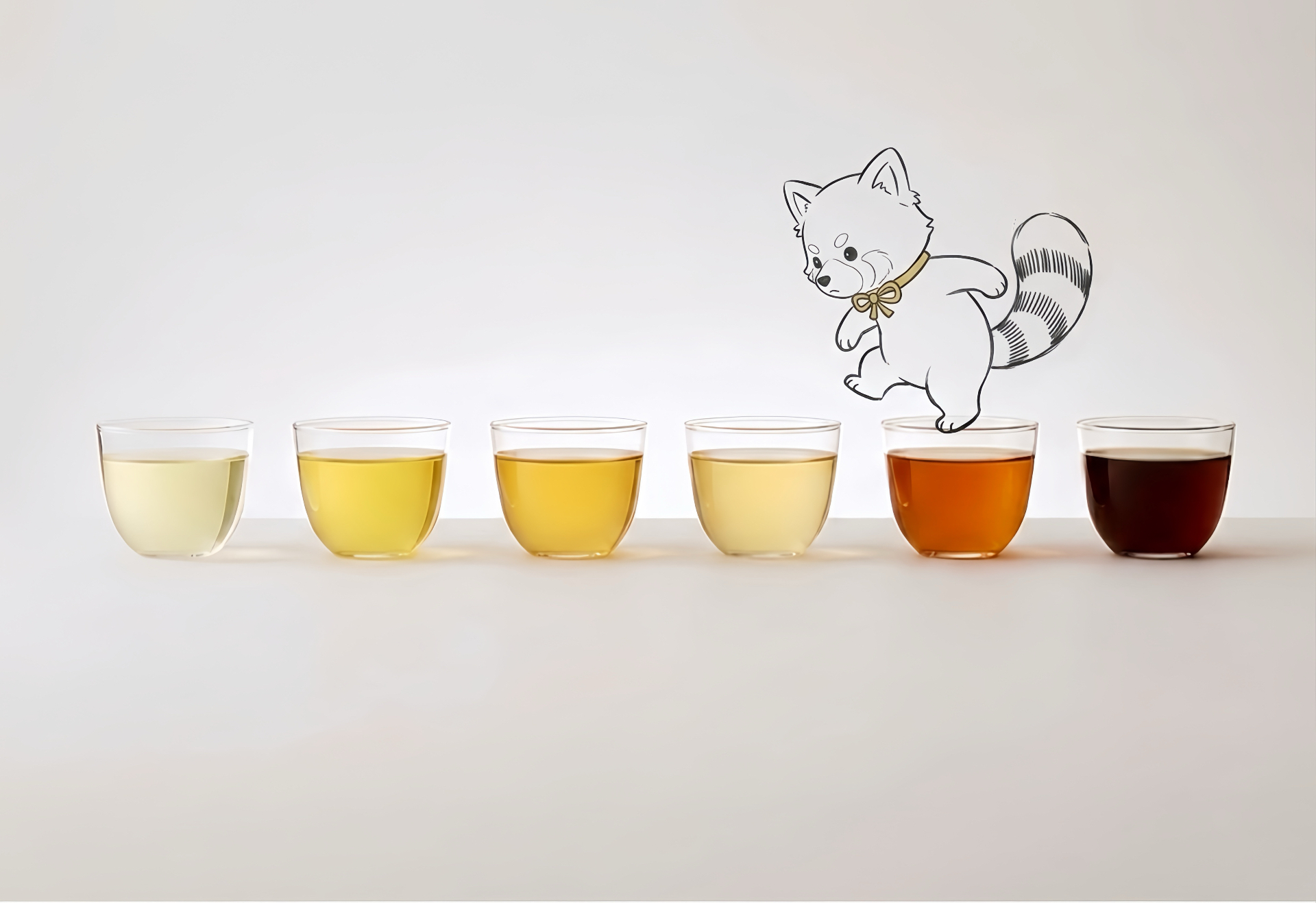
Understanding Tea, Simply
The main tea families, their nuances, and what they truly change in the cup.
At HOLLIN, we believe tea doesn't need to be complicated to be appreciated.
All leaves come from a single plant: Camellia sinensis.
What changes is the way they are processed.
A question of oxidation
Like an apple that browns when cut, tea leaves naturally oxidize. The higher the oxidation, the deeper the taste and the darker the color.
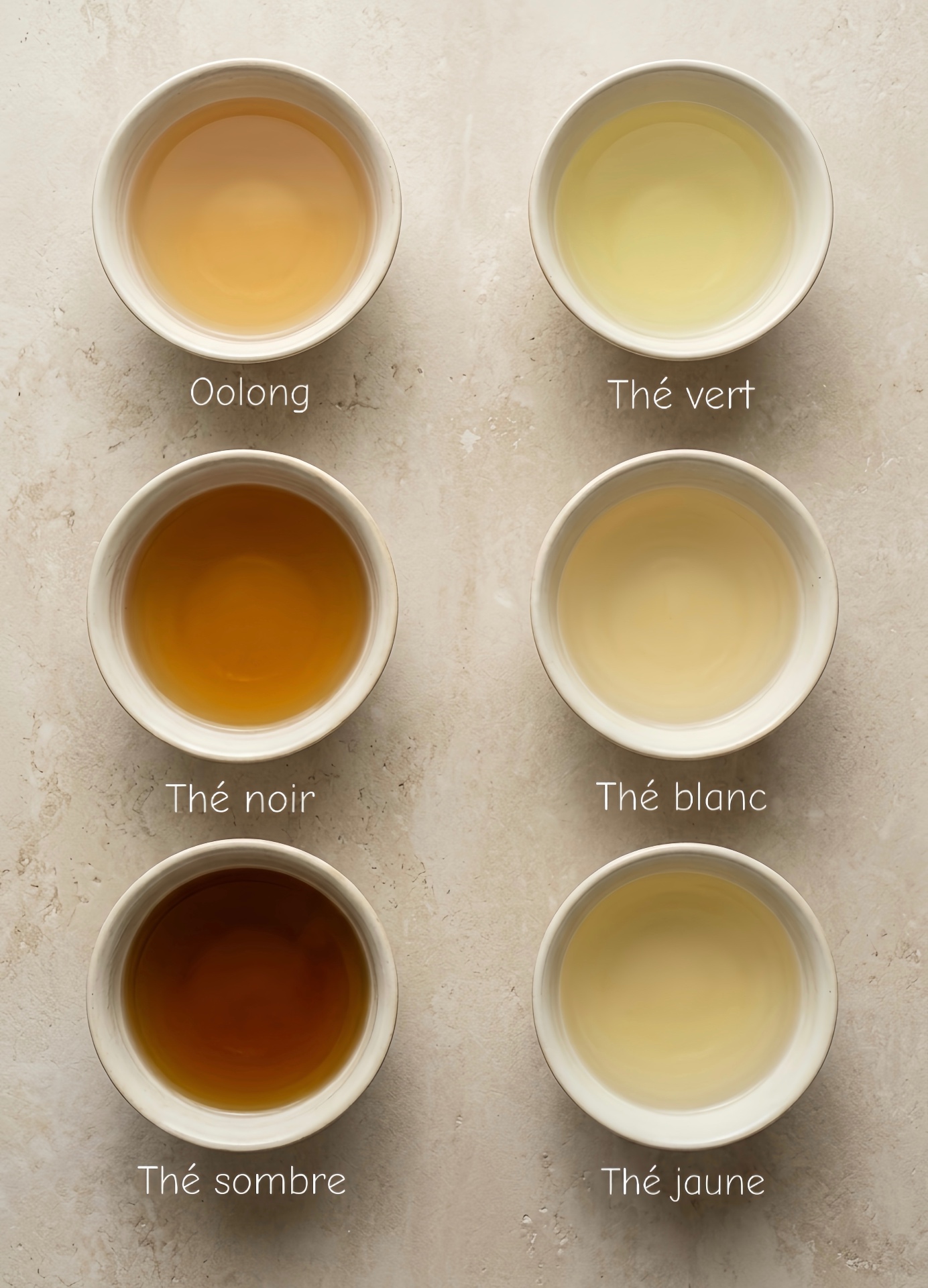
The main tea families
To simplify, here are the main categories:
• Green tea Fresh, vegetal, light. Minimally oxidized, it retains a very vivid sensation.
• Black tea Round, warm, structured. Fully oxidized, with an amber infusion.
• Oolong In between. Floral, nuanced, sometimes lightly roasted.
Lesser-known categories
Some families are less known in Europe, but equally interesting:
• White tea Minimally processed. Soft, delicate, almost aerial.
• Yellow tea Rare. Rounder than green tea, with less bitterness.
• Dark tea (Pu erh) Aged over time. Deep, enveloping, with woody notes.
Caffeine: a different kind of energy
Tea naturally contains caffeine. But its effect is often perceived as gentler than coffee's.
Why? Because tea's caffeine is associated with other compounds, which slows its absorption.
In practice: • Black tea → more pronounced sensation • Green tea / oolong → more gradual • White tea → often lighter
It's not a question of "strong or weak," but of rhythm and balance.
Polyphenols: what structures the taste
Polyphenols are naturally present in tea. They contribute to: • mouthfeel structure • slight astringency • aromatic depth
Generally: • Green teas contain more → more vivid sensation • Black teas contain less → rounder taste • Oolongs offer a balance between the two
A simple reading
Rather than memorizing complex classifications, just understand this:
The more tea is processed, the rounder it becomes. The less it is processed, the fresher it stays.
The HOLLIN approach
At HOLLIN, we don't try to explain everything, but to make tea self-evident.
In our drinks as in our leaves: • green tea brings freshness • oolong brings complexity • black tea brings roundness
Each cup is a simple interpretation of these balances.
Tea is not a theory. It's a sensation.
And often, the best way to understand it is simply to drink it.